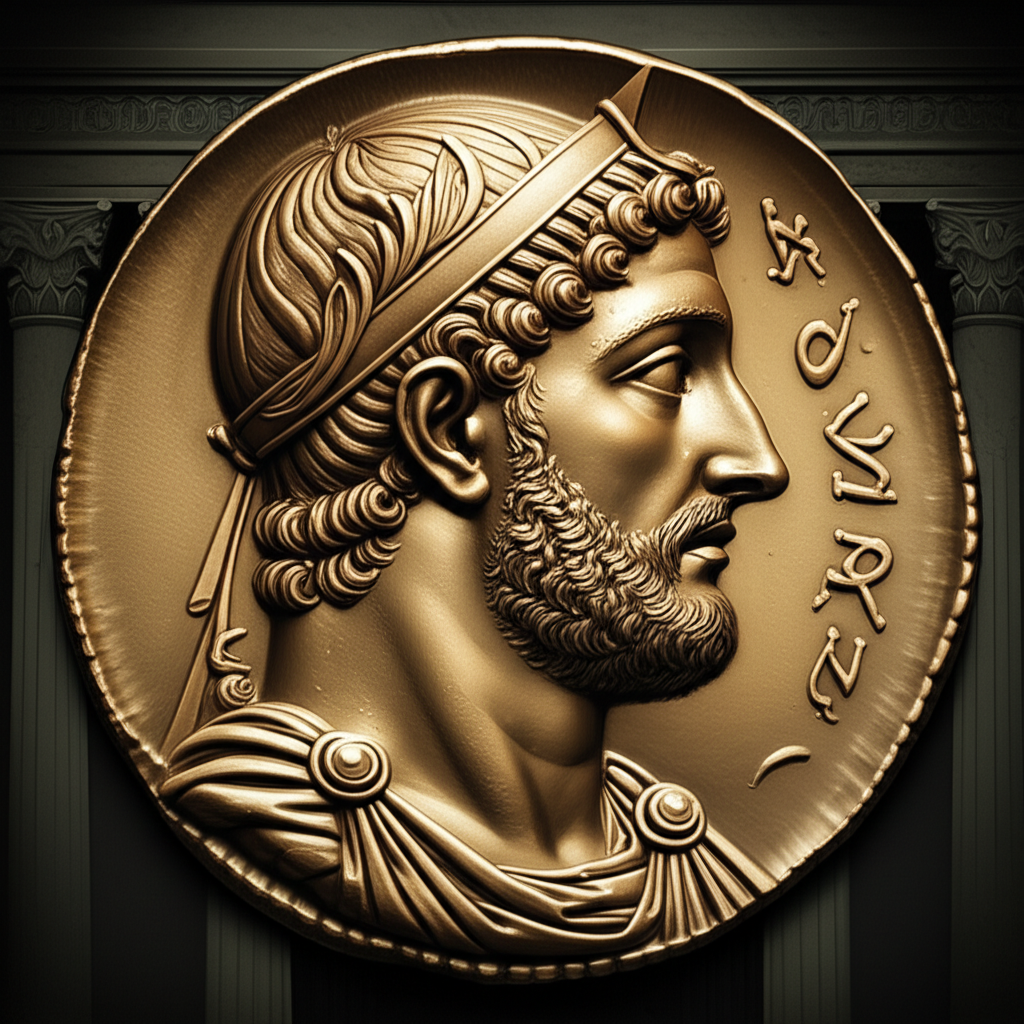
The reign of Menander I marked the zenith of the Indo-Greek Kingdom, not merely for its territorial expanse but for its sophisticated administrative strategy. While his military campaigns reputedly reached the Sunga capital of Pataliputra, his more lasting achievement was the political and cultural consolidation of his diverse domains. Menander’s statecraft was predicated on a deliberate policy of syncretism, a pragmatic approach designed to legitimize his rule among a predominantly non-Greek populace.
This strategy was most visibly manifested in his coinage, which utilized bilingual inscriptions in Greek and Kharosthi and featured both Hellenistic and Indian religious symbols. By presenting himself as a Dharmarāja or “King of Dharma,” he skillfully appealed to local traditions. His well-documented patronage of Buddhism, immortalized in the text Milinda Panha, was not merely a personal intellectual pursuit but a calculated political maneuver. Aligning himself with the influential Buddhist establishment provided a powerful counterbalance to Brahmanical authority and fostered loyalty among his subjects. This fusion of Hellenistic administration with Indian cultural and religious norms created a unique Greco-Buddhist civilization that defined the kingdom’s character and ensured its stability long after his military conquests had concluded.