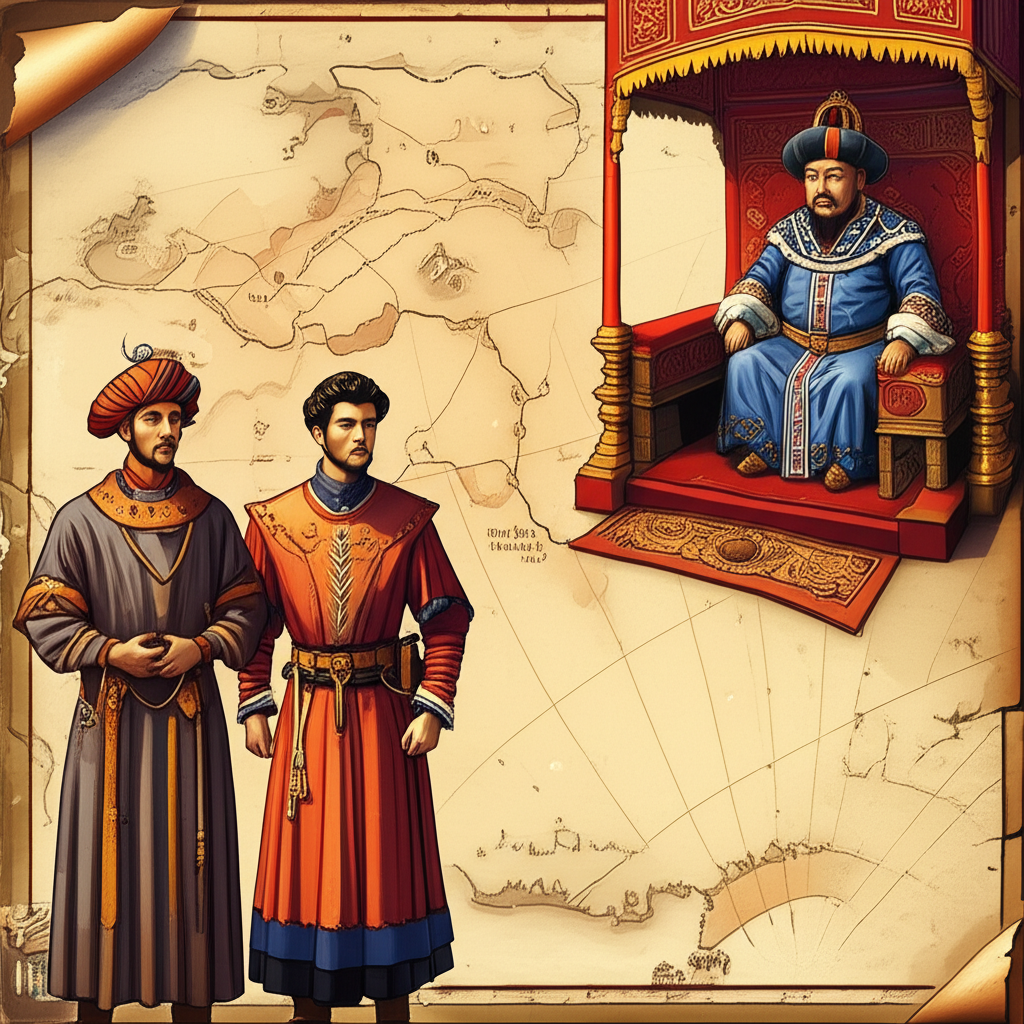
The arrival of Niccolò, Maffeo, and Marco Polo at the court of Kublai Khan in 1275 represented more than the culmination of a perilous overland expedition; it was a strategic convergence of interests. For the Great Khan, ruler of the nascent Yuan Dynasty, the Venetians were not merely curiosities from a distant land. They were a source of valuable, untainted intelligence on European affairs and a potential instrument for administering a vast and ethnically diverse empire. The Khan astutely recognized that foreigners, lacking local allegiances, could serve as more reliable administrators and observers than officials drawn from the conquered Chinese populace or rival Mongol factions.
This calculated utilization of foreign expertise explains the Polos’ extended seventeen-year sojourn in Cathay. Their integration into the imperial bureaucracy was facilitated by the issuance of the paiza, a golden tablet granting them authority and safe passage throughout the Khan’s domains. This was no mere token of favor but a clear instrument of statecraft. In his capacity as an emissary, Marco Polo’s travels were not those of a tourist but of an imperial agent, tasked with gathering information on the economic conditions, military readiness, and local customs of various regions under Mongol rule.
The Polos’ journey, therefore, must be analyzed beyond the lens of mercantile ambition or simple exploration. It was a sophisticated interplay of diplomacy and intelligence-gathering, where the Venetians’ unique perspective provided a strategic advantage to a Mongol emperor consolidating his rule over China. Their detailed accounts, later immortalized in The Travels, were a direct byproduct of their functional role within the highly organized, cosmopolitan structure of the Mongol Empire.