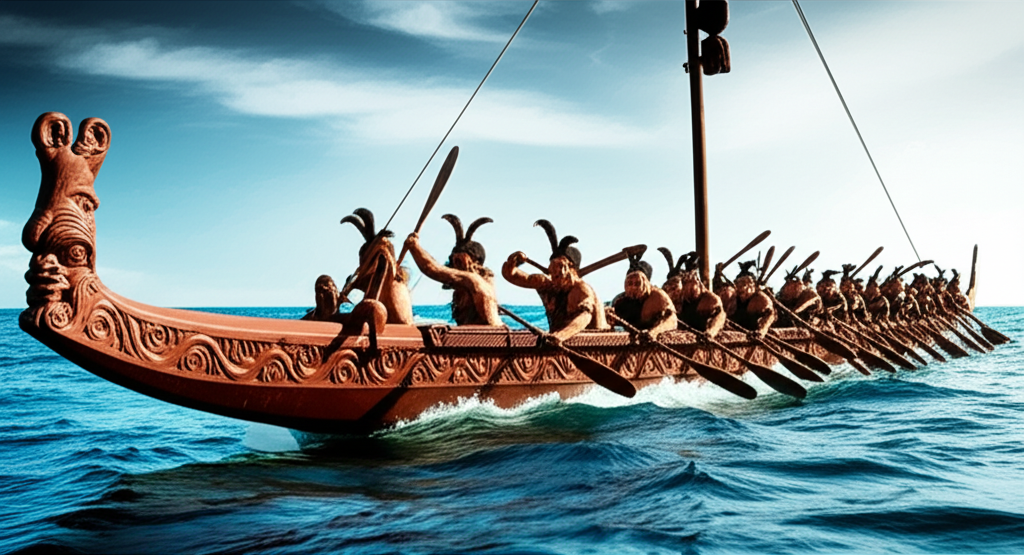
During the conflicts of the early to mid-nineteenth century, the Maori deployment of the waka taua constituted a highly sophisticated approach to littoral combat. Far exceeding their function as mere troop transports, these massive war canoes operated as the primary instruments of maritime power projection across the coastal and riverine theaters of New Zealand.
Historical analyses reveal that Maori commanders exploited the structural advantages of these vessels to achieve localized naval supremacy. Carved from massive timber, the canoes possessed exceptionally shallow drafts, granting them unparalleled mobility. This specific design parameter allowed Maori forces to navigate treacherous estuarine environments and narrow inland waterways, effectively neutralizing the pursuit capabilities of deep-draft European gunboats and heavier sailing ships.
The tactical execution of these naval assets relied heavily on the principles of amphibious warfare and rapid maneuverability. Rather than engaging in prolonged broadside exchanges, Maori naval strategy prioritized the following operational directives:
Executing coordinated flanking maneuvers to encircle isolated enemy vessels within confined coastal waters.
Utilizing the cover of complex coastal topography to launch sudden boarding actions against larger, less maneuverable ships.
* Establishing rapid extraction corridors, allowing warriors to disengage and retreat into dense inland river networks before effective enemy counter-fire could be organized.
Through these precise maneuvers, Maori forces successfully maximized the strategic utility of the war canoe. By dictating the spatial parameters of naval engagements and utilizing the environment to their advantage, they transformed regional waterways into hostile terrain for heavily armed adversaries. This approach demonstrated a profound mastery of asymmetric maritime tactics, securing their operational effectiveness in a rapidly evolving era of naval warfare.