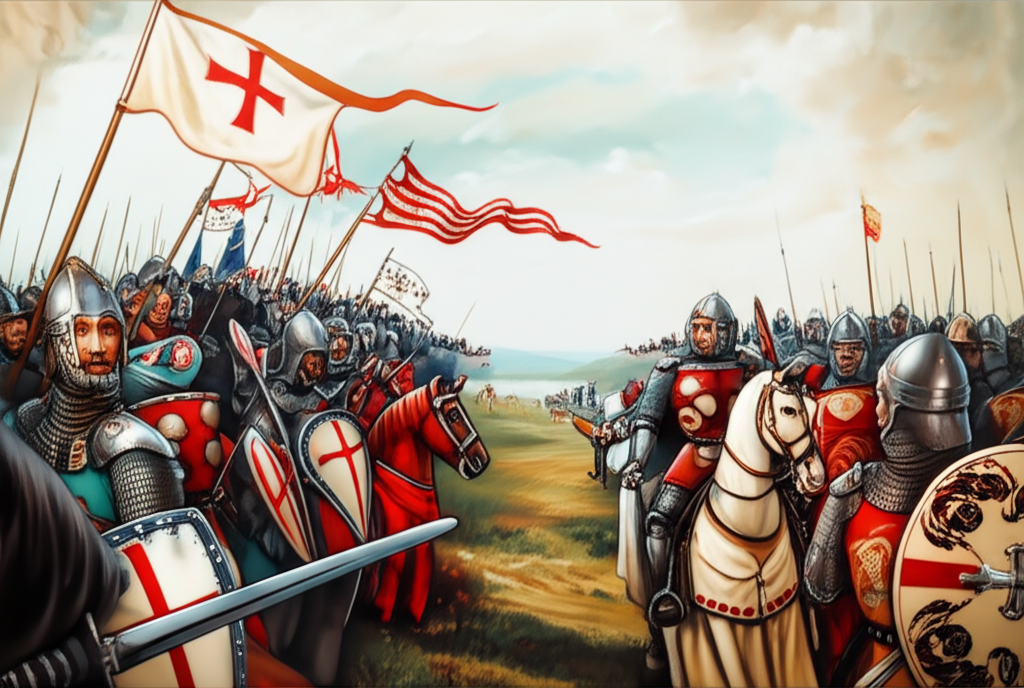
The formation of the Lombard League represented a pivotal shift in the political and military landscape of twelfth-century Italy. This alliance of northern communes was not merely a reaction to imperial overreach but a sophisticated strategic maneuver designed to counter the military superiority of Holy Roman Emperor Frederick Barbarossa. The League pooled resources, coordinated defenses, and established a unified command structure, transforming disparate city-states into a formidable political entity capable of challenging imperial authority directly.
The culmination of this struggle occurred at the Battle of Legnano in 1176. The strategic brilliance of the League was not found in novel weaponry, but in tactical discipline and organization. The communal infantry, primarily citizen-militiamen, formed a shield wall around the carroccio, a sacred war wagon that served as a command post and rallying point. This disciplined infantry formation was specifically designed to withstand the charge of Barbarossa’s elite German heavy cavalry, which had previously proven decisive on European battlefields.
When the imperial cavalry charge failed to break the infantry line, the battle’s momentum shifted. The Lombard cavalry, which had initially been routed, regrouped and executed a successful counter-attack on the emperor’s exposed flank. The engagement proved that well-organized infantry could effectively neutralize the era’s premier offensive force. The victory at Legnano was therefore not just a political triumph; it was a tactical watershed that forced the Emperor to negotiate, ultimately securing the autonomy of the Italian communes in the Peace of Constance.