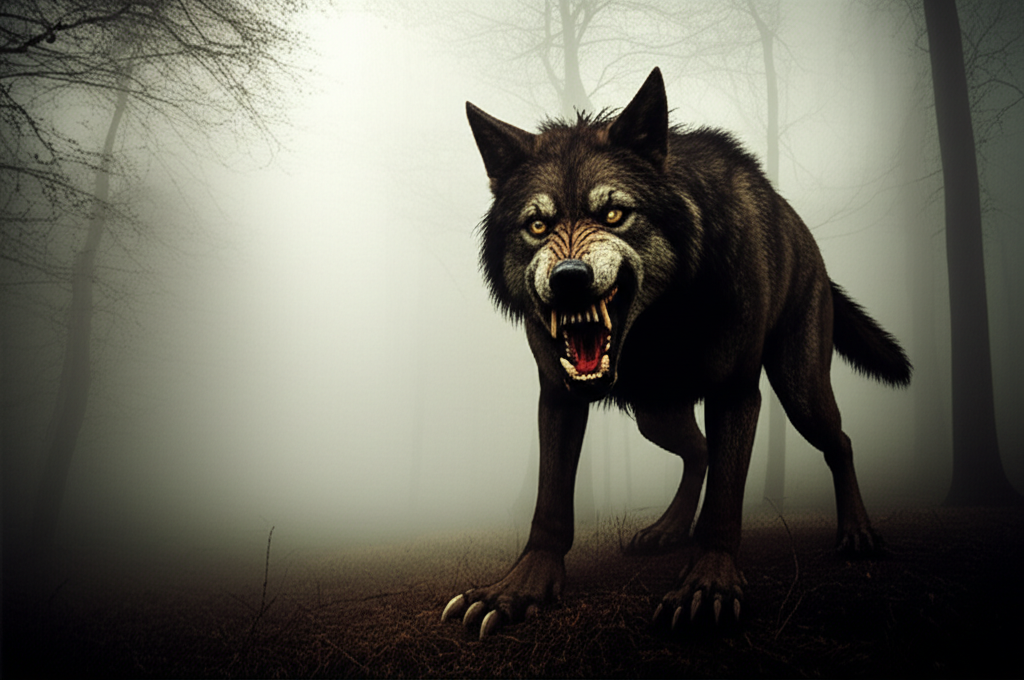
Between 1764 and 1767, the remote Province of Gévaudan became the epicenter of a predation crisis that challenged the zoological understanding of the era. While wolf attacks were not uncommon in rural France, the systematic slaughter attributed to the Beast of Gévaudan displayed a distinct tactical anomaly. Survivors and witnesses consistently described a creature possessing morphology distinct from the European grey wolf, noting a formidable size, reddish pelt, and a peculiar black stripe along the spine.
The state response evolved from local hunts to a matter of national security, prompting King Louis XV to intervene. The deployment of professional wolf hunters, including the boastful Jean-Charles-Marc-Antoine Vaumesle d’Enneval, yielded little success, suggesting the quarry possessed an uncanny ability to evade conventional trapping strategies. It was not until the Royal Gunbearer, François Antoine, killed a large wolf in September 1765 that the court declared the matter closed. However, the subsequent resumption of attacks indicated that the initial identification was premature, a politically motivated conclusion rather than a factual one.
The definitive end to the terror arrived only when a local hunter, Jean Chastel, felled a beast during a hunt in the Sogne d’Auvers. Post-mortem analysis of this final specimen remains a subject of intense historical debate. While the necropsy report described a canine of extraordinary proportions, modern analysis suggests the creature was likely a wolf-dog hybrid or an aggressive sub-species of Canis lupus not native to the region. The theory that the beast was an exotic import, such as a hyena, or a trained instrument of human malice, lacks forensic evidence but underscores the hysteria that permeated the historical record.