The Hussite Wars of the early 15th century were defined by a revolutionary military innovation: the tactical deployment of the war wagon. This system, far from being a simple defensive measure, represented a sophisticated combined arms doctrine that repeatedly nullified the battlefield advantages of heavily armored feudal cavalry.
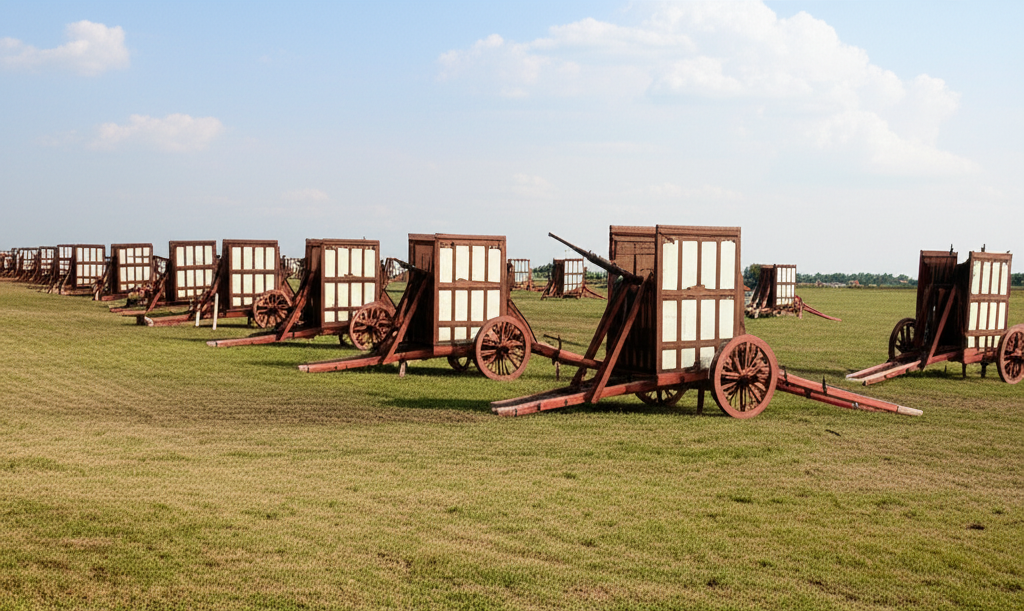
Hussite commanders, most notably Jan Žižka, organized their specialized wagons into a mobile fortress known as a tabor or wagon fort. Upon engaging the enemy, these wagons were quickly chained together, wheel to wheel, forming an impenetrable laager. Plated with thick wooden boards and manned by well-drilled crews, this barricade provided superior protection against enemy charges and missile fire, effectively creating a pre-fabricated battlefield fortification that dictated the terms of engagement.
The true strategic brilliance of the wagon fort lay in its integration of different military assets. From the safety of the wagons, crossbowmen and early handgunners unleashed devastating volleys upon the stalled enemy knights. Small artillery pieces, positioned in the gaps between wagons, provided further firepower. Once the enemy’s assault was broken and their forces were in disarray, the wagon chains could be unlinked, allowing Hussite infantry and cavalry to surge from the center of the formation to deliver a decisive counter-attack against a demoralized foe. This disciplined system transformed otherwise vulnerable infantry into a dominant military force, demonstrating a mastery of tactical coordination that influenced European warfare for generations.