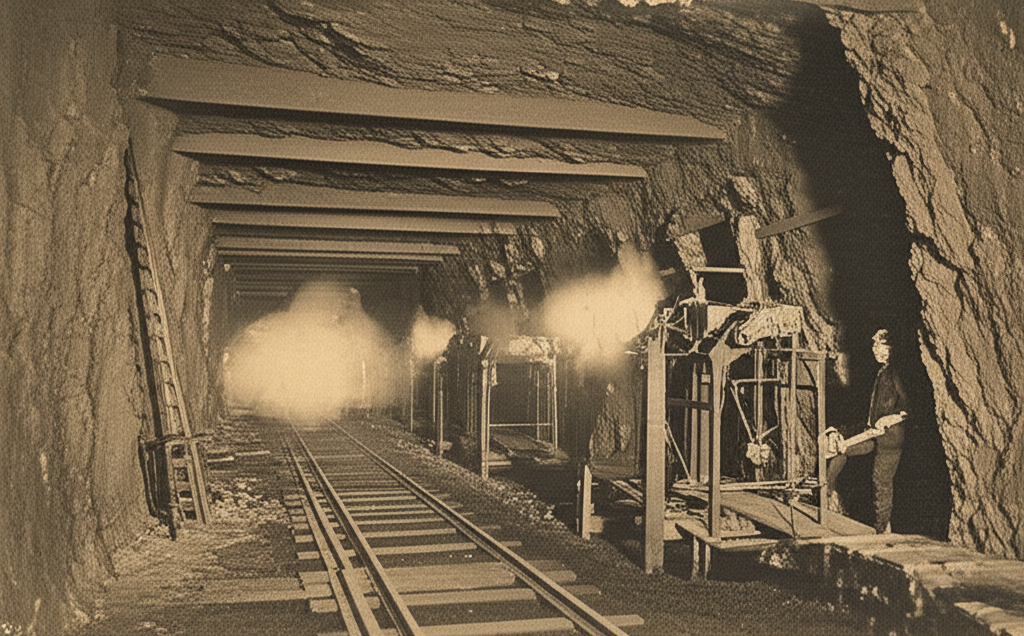
The early years of the Hoosac Tunnel project were characterized by frustratingly slow progress. The primary blasting agent, black powder, proved woefully inadequate against the tunnel’s resilient mica schist. Crews drilled shallow holes, packed them with the relatively weak explosive, and cleared only a few feet of rock with each detonation. This painstaking process threatened to extend the project’s timeline indefinitely and inflate its already substantial budget, casting serious doubt on its viability.
The introduction of nitroglycerin in 1866 marked a turning point in the tunnel’s construction, fundamentally altering the engineering strategy. This powerful and notoriously unstable liquid explosive offered a dramatic increase in blasting efficiency. Its greater concussive force allowed for deeper drill holes and the removal of larger sections of rock per blast. Engineers developed new techniques to handle the volatile substance, including manufacturing it on-site to reduce the risks of transportation. The shift from solid powder to a liquid explosive represented a significant technological leap in rock excavation.
While this innovation accelerated progress, it came at a considerable human cost. Accidental detonations were frequent and devastating, earning the Hoosac Tunnel the grim moniker “The Bloody Pit.” Despite the immense danger, the strategic adoption of nitroglycerin was deemed essential for the project’s completion. Its unparalleled power was the critical factor that finally overcame the formidable geological challenges, enabling the tunnel to be finished after nearly a quarter-century of arduous labor.