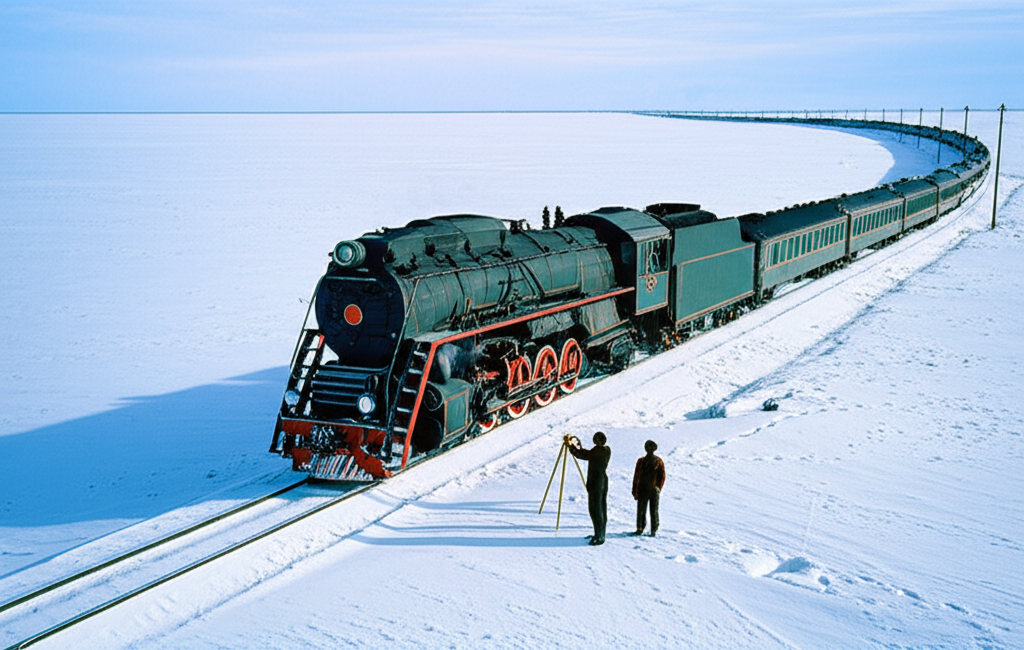
The construction of the Trans-Siberian Railway, formally inaugurated in 1891, represented the culmination of Imperial Russia’s strategic ambition to consolidate dominion over its vast eastern territories. Championed by Finance Minister Sergei Witte, the project served not merely as a transport initiative but as a geopolitical instrument designed to project power toward the Pacific and integrate the Siberian frontier into the European Russian economy.
Engineers encountered unprecedented logistical impediments, necessitating distinct operational phases to manage the sheer scale of the endeavor. The terrain presented formidable adversaries, ranging from the dense taiga to the unyielding permafrost. To optimize the route and reduce immense capital expenditure, the administration negotiated the construction of the Chinese Eastern Railway across Manchuria. This strategic deviation significantly shortened the distance to Vladivostok, although it inadvertently created diplomatic vulnerabilities that later complicated Russian foreign policy.
The most technically demanding segment, the Circum-Baikal Railway, required the excavation of numerous tunnels through the unstable cliffs bordering Lake Baikal. Until its finalization, ice-breaking ferries transported rolling stock across the water, a bottleneck that severely hampered logistic throughput during critical periods. The eventual completion of the continuous line fundamentally altered the military and economic calculus of Eurasia, effectively ending the historical isolation of the Russian Far East.