
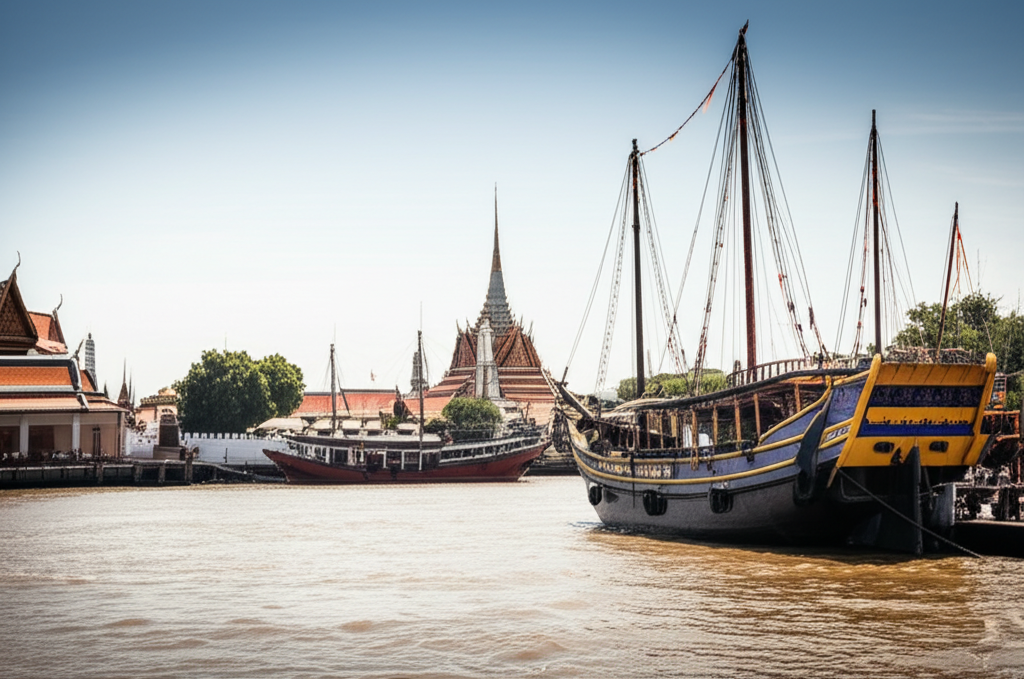
The ascent of Ayutthaya as a paramount maritime power in Southeast Asia was predicated on its mastery of geography and hydrography. Established in 1351, the capital capitalized on its distinct island topography, surrounded by three rivers, most notably the Chao Phraya River. This intricate network provided deep-water access for ocean-going vessels while insulating the citadel from immediate naval invasion. By the 17th century, the city had surpassed its regional contemporaries, functioning not merely as a political center but as a critical connector linking the Indian Ocean with the South China Sea.
Economically, the Siamese court implemented a sophisticated system of Royal Monopolies. Rather than allowing unfettered free markets, the crown retained exclusive rights to trade high-value commodities such as sapanwood, ivory, and deerskins. This centralization ensured that foreign bullion flowed directly into the royal treasury, funding both military expansion and architectural patronage. The administration skillfully leveraged the seasonal monsoon winds, forcing merchants from East Asia and the West to winter in the capital, thereby transforming a logistical necessity into a sustained economic opportunity.
The kingdom’s strategic openness fostered a cosmopolitan environment where Foreign Quarters flourished outside the city walls. Portuguese missionaries, Persian diplomats, and Japanese mercenaries were granted semi-autonomous zones, allowing the administration to utilize foreign expertise in warfare and navigation without compromising internal sovereignty. Through this delicate balance of strict economic control and diplomatic accommodation, Ayutthaya maintained its status as a premier global entrepôt until its eventual fall in 1767.


