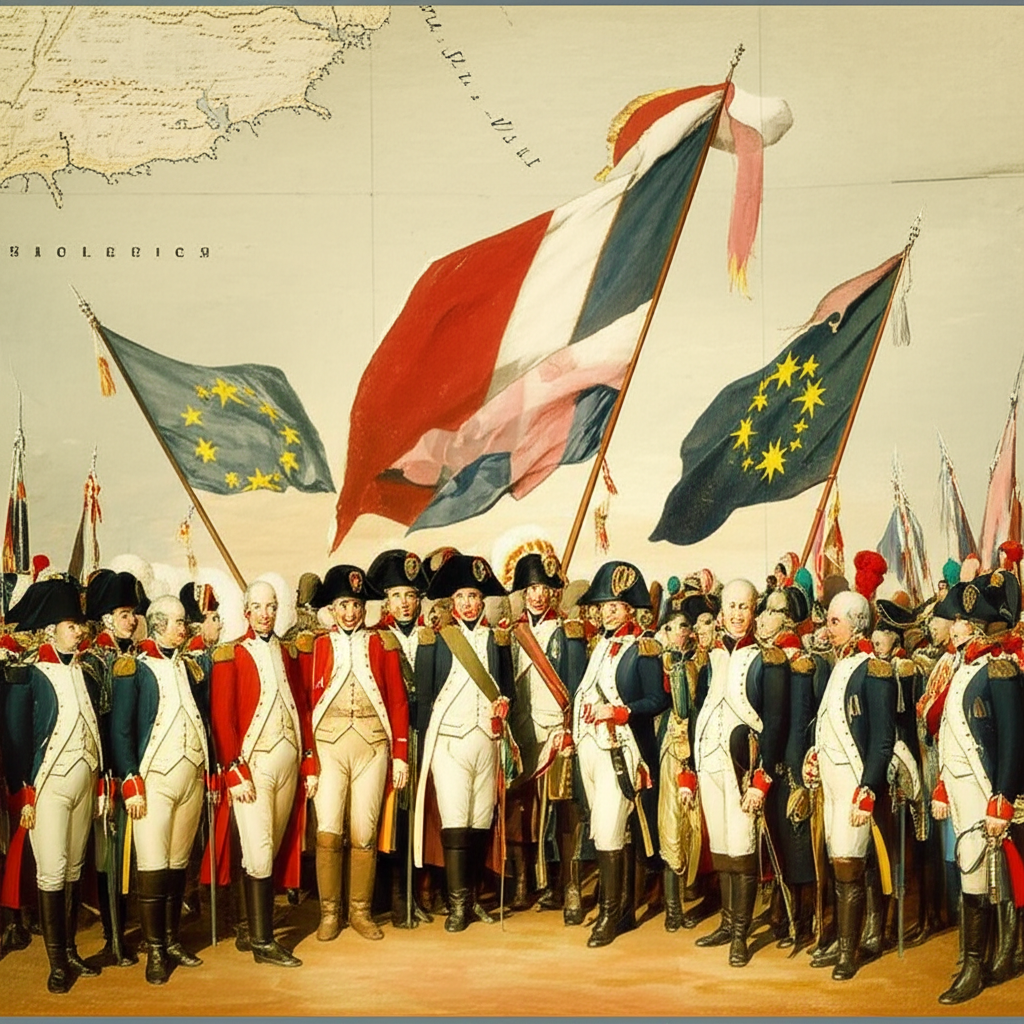
In the spring of 1797, the War of the First Coalition approached its decisive terminus in the Styrian town of Leoben. The Preliminaries of Leoben represented not merely a cessation of hostilities, but a fundamental realignment of European power dynamics. General Bonaparte, having systematically outmaneuvered Archduke Charles, utilized the threatening proximity of his forces to Vienna to compel the Habsburg plenipotentiaries into negotiations. This move secured the strategic gains of the Italian Campaign without necessitating a high-risk assault on the Austrian capital, where supply lines would have been dangerously overextended.
The strategic calculation behind this armistice demonstrated a profound shift from revolutionary idealism to dynastic realpolitik. While the Habsburg Monarchy sought to preserve the integrity of its hereditary lands, the French Republic demanded recognition of its expanded frontiers. The resulting agreement laid the groundwork for the controversial partition of the Republic of Venice, a maneuver that sacrificed the sovereignty of an ancient neutral state to satisfy Austrian territorial appetites in exchange for the cession of the Austrian Netherlands and Lombardy.
This cynical exchange highlighted the ruthless efficiency of Napoleonic diplomacy, prioritizing state interests over ideological consistency. Ultimately, the accord reached at Leoben served as the structural blueprint for the subsequent Treaty of Campo Formio. It allowed France to consolidate its hegemony over Northern Italy while offering Austria a temporary, if humiliating, respite to rebuild its shattered armies. The event marked the effective dissolution of the First Coalition, proving that superior military operational art could be successfully transmuted into advantageous diplomatic settlements.