
The migration of the Sakas into the Indian subcontinent during the second century BCE marked a decisive shift in the geopolitical balance of the ancient world. Displaced from Central Asia by the Yuezhi, these nomadic cavalrymen descended through the Khyber Pass, systematically dismantling the fracturing hegemony of the Indo-Greeks. The establishment of the Indo-Scythian Kingdom was not merely a result of military brute force but of calculated strategic adaptation.
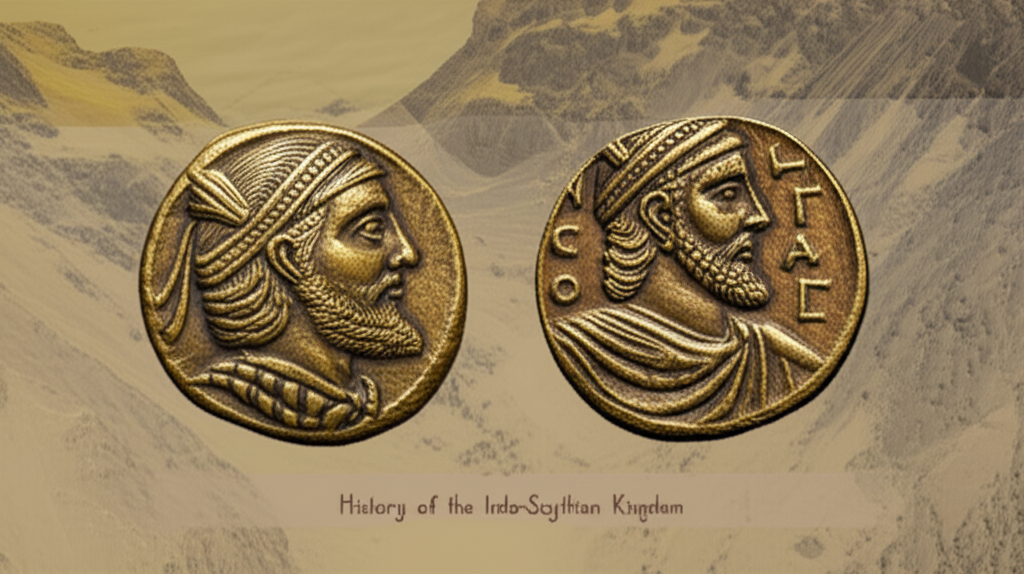
Under the inaugural leadership of Maues, the Scythians executed a conquest of Gandhara and Taxila that prioritized administrative continuity over cultural eradication. Recognizing the utility of existing frameworks, they retained the Satrapal system of governance, allowing local governors to maintain order while paying tribute to the Scythian overlords. This administrative prudence was mirrored in their numismatics, which blended Hellenistic artistic standards with Buddhist iconography to secure economic legitimacy among the conquered populations.
The kingdom achieved its greatest consolidation under Azes I, who unified disparate tribal factions into a formidable empire. However, the inherent decentralization of their confederacy eventually invited internal fragmentation. By the first century, the encroaching Indo-Parthians and the rising Kushan Empire exploited these divisions, gradually absorbing Scythian territories. Despite their political dissolution, the Indo-Scythians fundamentally altered the region’s military tactics and artistic synthesis, serving as a critical bridge between the steppes and the subcontinent.

