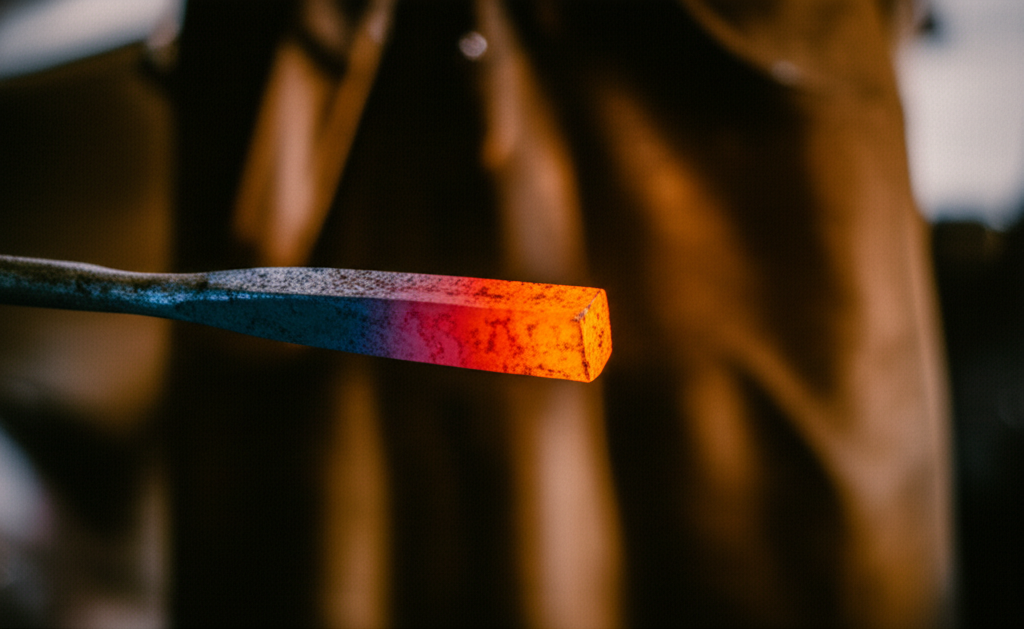
The metallurgical limitations of early wrought iron—specifically its distinct lack of carbon and resulting softness—necessitated the development of sophisticated surface modification techniques. To repurpose malleable iron into durable tools and armaments, ancient and medieval smiths mastered the art of case hardening. This process represented a critical strategic optimization in ferrous metallurgy, allowing artisans to circumvent the high cost and scarcity of homogeneous steel while retaining the structural benefits of a ductile core.
The prevailing methodology involved a technique known as pack hardening. Artisans enclosed finished iron components within a sealed clay or iron vessel, closely surrounding them with carbon-rich organic matter such as crushed bone, burnt leather scraps, hooves, or charcoal dust. Upon subjecting the container to prolonged exposure at high temperatures, the organic material released carbon, which slowly diffused into the surface lattice of the iron. This chemical migration transformed the outer layer into hardenable steel, while the internal structure remained fibrous and shock-absorbent.
This dual-structure approach provided a distinct tactical advantage over through-hardened steel, which was historically prone to catastrophic brittle fracture under sudden impact. By restricting the hardness to the exterior “case,” smiths ensured that files, gun locks, and striking tools possessed the necessary wear resistance to function effectively without sacrificing the toughness required to withstand heavy mechanical stress. Thus, the practice was not merely a substitute for superior materials, but a deliberate engineering solution designed to strictly balance durability with elasticity.