
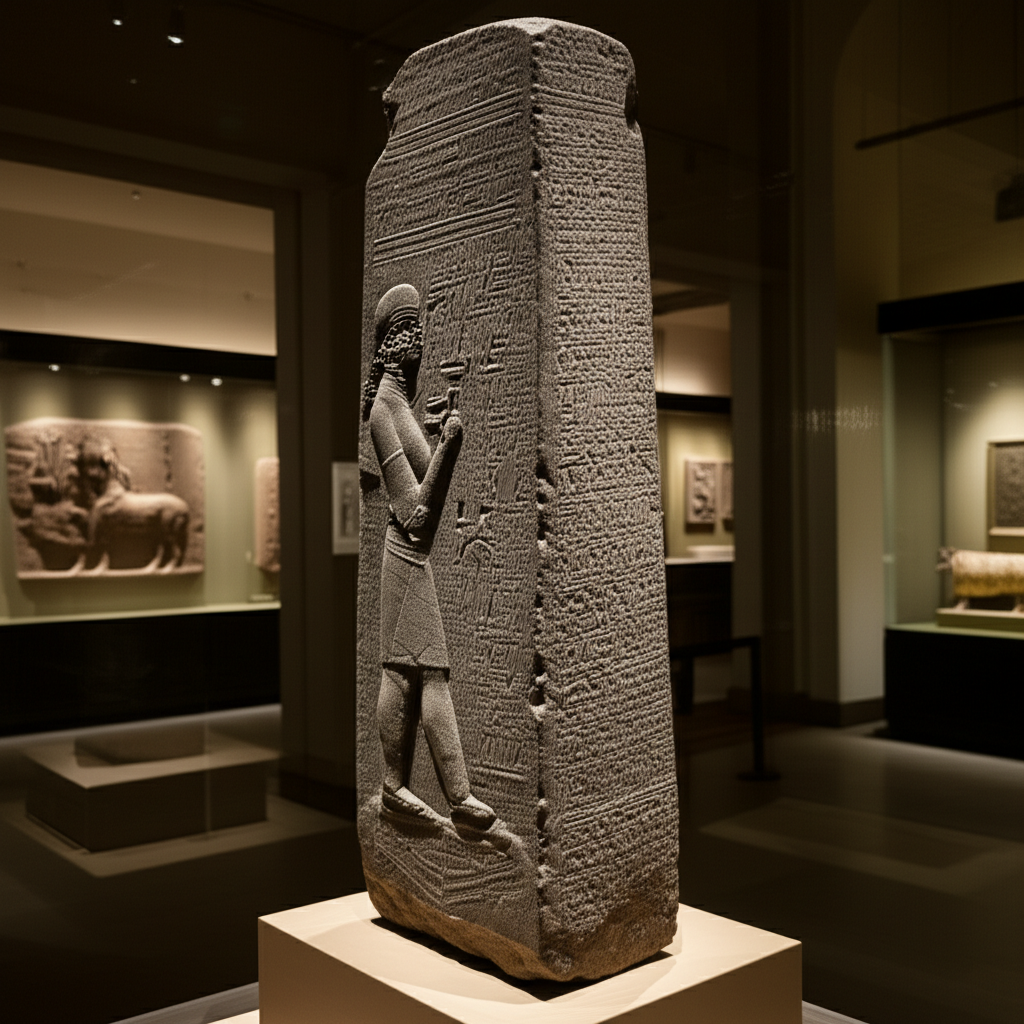
The Hammurabi Stele stands as more than a mere codification of Mesopotamian law; it was a sophisticated instrument of political consolidation and royal propaganda. Erected in public spaces, its primary function was not for daily legal consultation but as a monumental declaration of Hammurabi’s divinely sanctioned authority. The relief at its apex, depicting the king receiving the laws from the sun god Shamash, provided an unambiguous visual narrative: Hammurabi was not a conqueror, but a just shepherd chosen by the gods to bring order. This public display was a strategic maneuver to legitimize his rule over the recently unified Babylonian empire.
The legal principles inscribed upon the diorite column further reveal this strategic intent. The application of lex talionis, the principle of retributive justice, was not uniform but was carefully stratified according to social class, reinforcing the existing social hierarchy and ensuring the stability of the state’s structure. By presenting a comprehensive system of justice that governed everything from commerce to family law, Hammurabi projected an image of an impeccably ordered and equitable kingdom. The stele thus served as a powerful symbol of centralized power, unifying a diverse populace under a single, divinely ordained legal and political authority.


