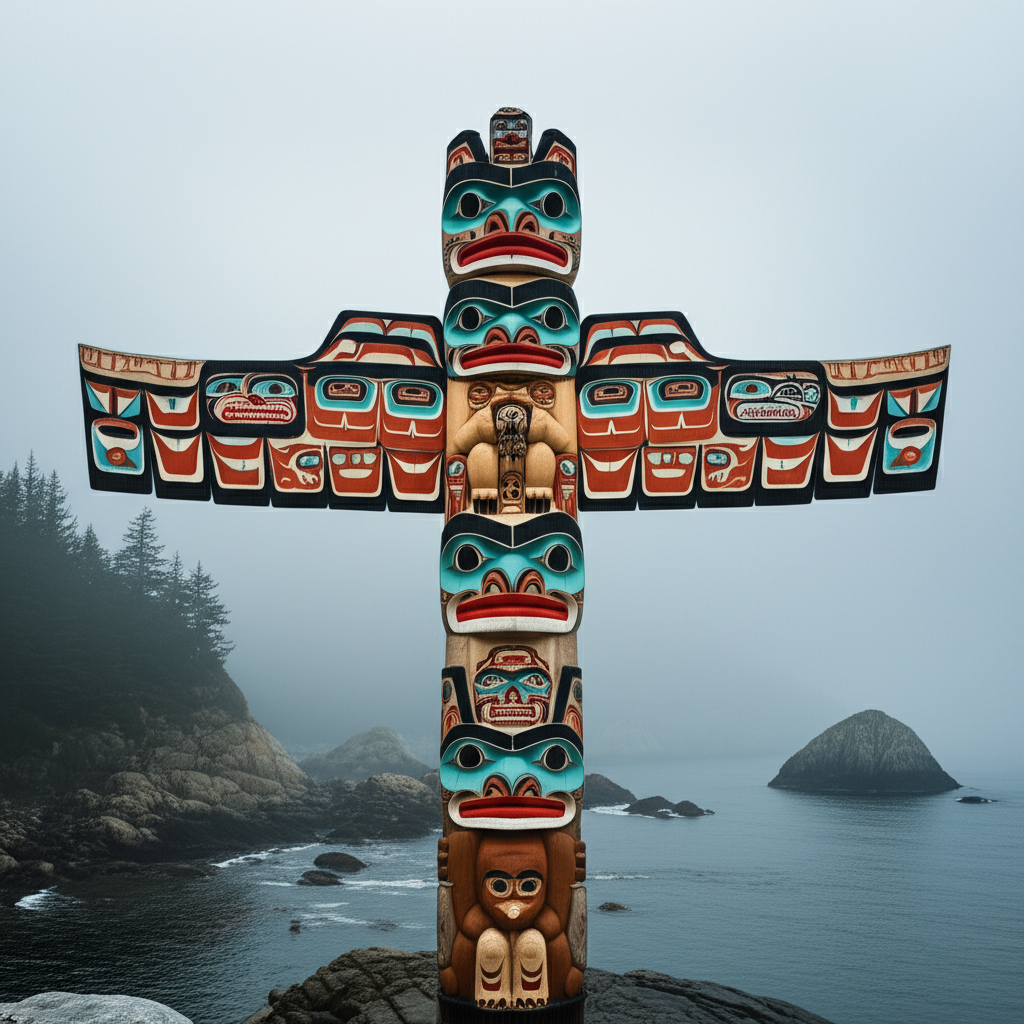
The societal architecture of the Haida people was defined by a strict dual division known as the moiety system. Every individual belonged inextricably to either the Raven or Eagle clan, a classification that dictated marriage protocols, ceremonial duties, and resource access. Descent was reckoned through the female line, ensuring that titles, crests, and territorial rights remained firmly within the matrilineal domain. This rigid stratification facilitated a complex hierarchy where rank was not merely inherited but perpetually validated through the strategic accumulation and redistribution of resources.
Spirituality within this framework was not a separate sphere of existence but an intrinsic element of governance and daily survival. The Haida worldview perceived the natural and supernatural realms as porous, intimately connecting human society with the animal kingdom. The Shaman, acting as the essential intermediary between these worlds, wielded the authority to cure illness and influence environmental conditions. Their power was derived from specific spirit guides, reinforcing the belief that success in the material world required distinct favor from the supernatural.
The convergence of social ambition and spiritual obligation culminated in the Potlatch. Far more than a festive gathering, this institution served as the primary vehicle for legal and economic maneuvering. Through the ceremonial distribution of wealth, high-ranking individuals solidified their status and publicly claimed rights to specific ancestors and supernatural encounters. Consequently, the stability of Haida civilization relied on a sophisticated interplay between rigid lineage laws and the fluid, transformative power attributed to the spirit world.