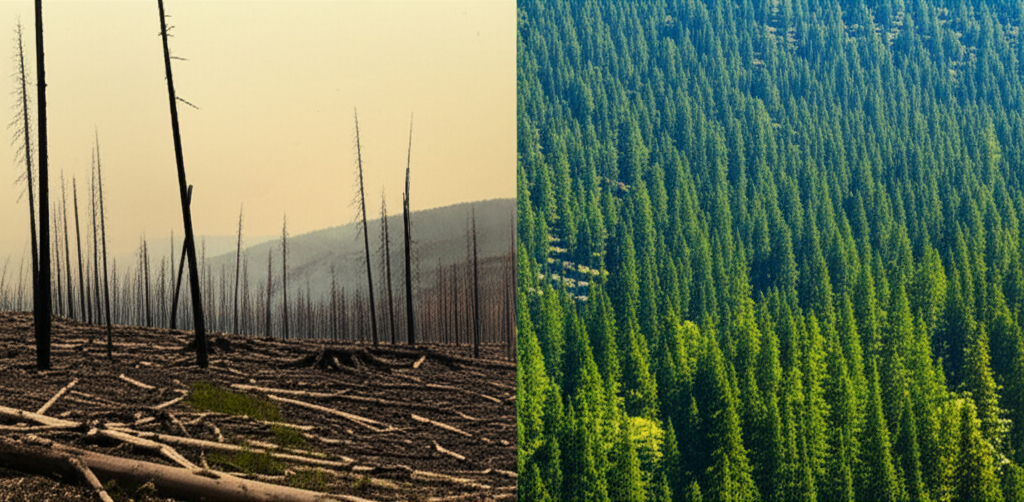
The cataclysm known as The Big Burn in August 1910 did more than scorch three million acres across the Northern Rockies; it fundamentally altered the trajectory of American land management. Prior to this event, a debate raged regarding the utility of “light burning”—the practice of allowing smaller fires to consume underbrush. However, the sheer scale of the 1910 devastation, which claimed dozens of lives and destroyed entire towns, silenced the proponents of prescribed burning and solidified the authority of the fledgling United States Forest Service.
In the ashes of the disaster, the strategy shifted from observation to total suppression. Administrators argued that fire was a failure of management rather than an ecological necessity. William Greeley, a forester who witnessed the inferno firsthand and later led the agency, championed the perspective that the forest must be protected like a crop. This philosophy necessitated the rapid expansion of infrastructure, leading to the construction of lookout towers, roads, and communication networks designed specifically for early detection and rapid response.
The political fallout resulted in the passage of the Weeks Act in 1911, which authorized federal purchase of forest lands for watershed protection and established cooperative fire control efforts. This legislation effectively militarized conservation, treating wildfire as an invading enemy to be vanquished. For decades thereafter, the objective remained absolute: to extinguish every flame by the morning following its discovery, a doctrine that prioritized immediate timber preservation over long-term ecological balance.