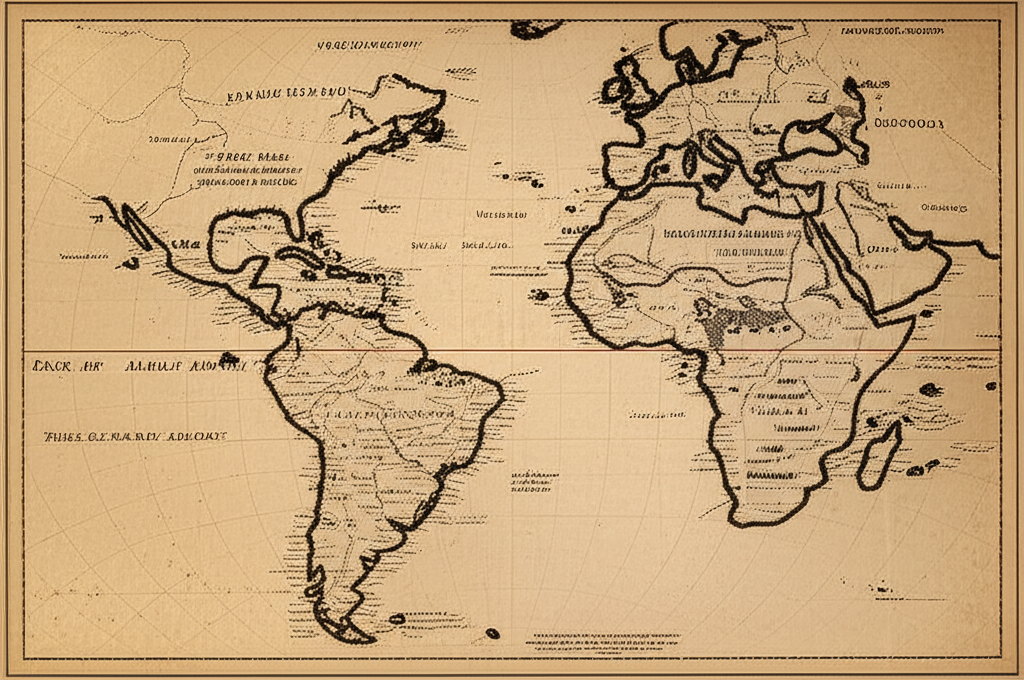
The monumental Universalis Cosmographia of 1507, created by the German cartographer Martin Waldseemüller, represented a pivotal moment in the conceptualization of the known world. This was not merely a navigational chart but a profound geopolitical statement. Its most enduring legacy was the decision to label the newly discovered southern landmass with the name “America,” a choice rooted in a specific intellectual argument of the time.
The selection of the name was a calculated act. While Columbus had opened the way, it was the widely circulated accounts of Amerigo Vespucci that compellingly argued these lands constituted a distinct continent, a “New World,” rather than the eastern edge of Asia. Waldseemüller and his scholarly collaborator Matthias Ringmann were persuaded by this interpretation. In their accompanying text, they explicitly justified their decision, proposing the land be named in honor of Vespucci, its supposed discoverer. This cartographic decision effectively sidelined Columbus in the popular naming convention, privileging the explorer who arguably better understood the discovery’s true nature.
Interestingly, Waldseemüller appeared to reconsider this attribution in his later works, removing the name “America” from his 1513 map. By then, the initial designation had already been cemented in the European consciousness, propelled by the thousand copies of the 1507 map that had circulated across the continent. The event serves as a powerful testament to the influence of early print and cartography in not only recording history but actively shaping it. The name, born of a scholarly interpretation, had become an irrevocable fact.