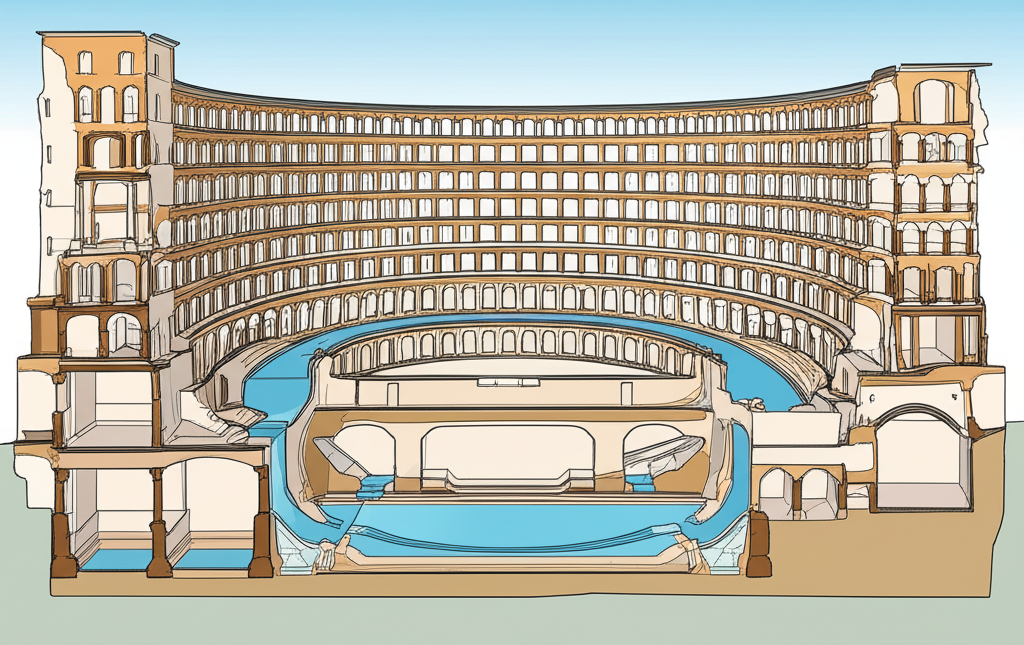
The grandeur of the Baths of Caracalla was a direct result of sophisticated Roman engineering, which seamlessly integrated multiple complex systems to support the massive public facility. The design was a testament not merely to architectural ambition but to a profound understanding of logistics, hydraulics, and thermal dynamics.
A primary engineering feat was the water supply. A dedicated spur of the Aqua Marcia aqueduct was constructed to fill the enormous cisterns that fed the complex. These reservoirs were strategically placed to use gravity, ensuring constant pressure and flow to the various pools and fountains without the need for mechanical pumps. This system was designed for continuous, high-volume operation, capable of serving thousands of bathers daily.
Equally impressive was the heating apparatus. The baths relied on a massive hypocaust system, a network of underfloor furnaces operated by slaves in a vast subterranean service level. This system did more than simply heat the rooms; it was precisely engineered to create a specific thermal journey for the bather. The flow of hot air was calibrated to establish a gradient of temperatures, moving from the warm tepidarium to the intensely hot caldarium.
This intricate machinery was supported by an extensive network of underground tunnels. These passages, wide enough for carts, allowed for the discreet transport of tons of wood to fuel the furnaces and the removal of ash, keeping the logistical operations entirely separate from the public areas above. The engineering of the Baths of Caracalla was, therefore, an exercise in creating a flawlessly functioning, self-contained system on an unprecedented scale.