
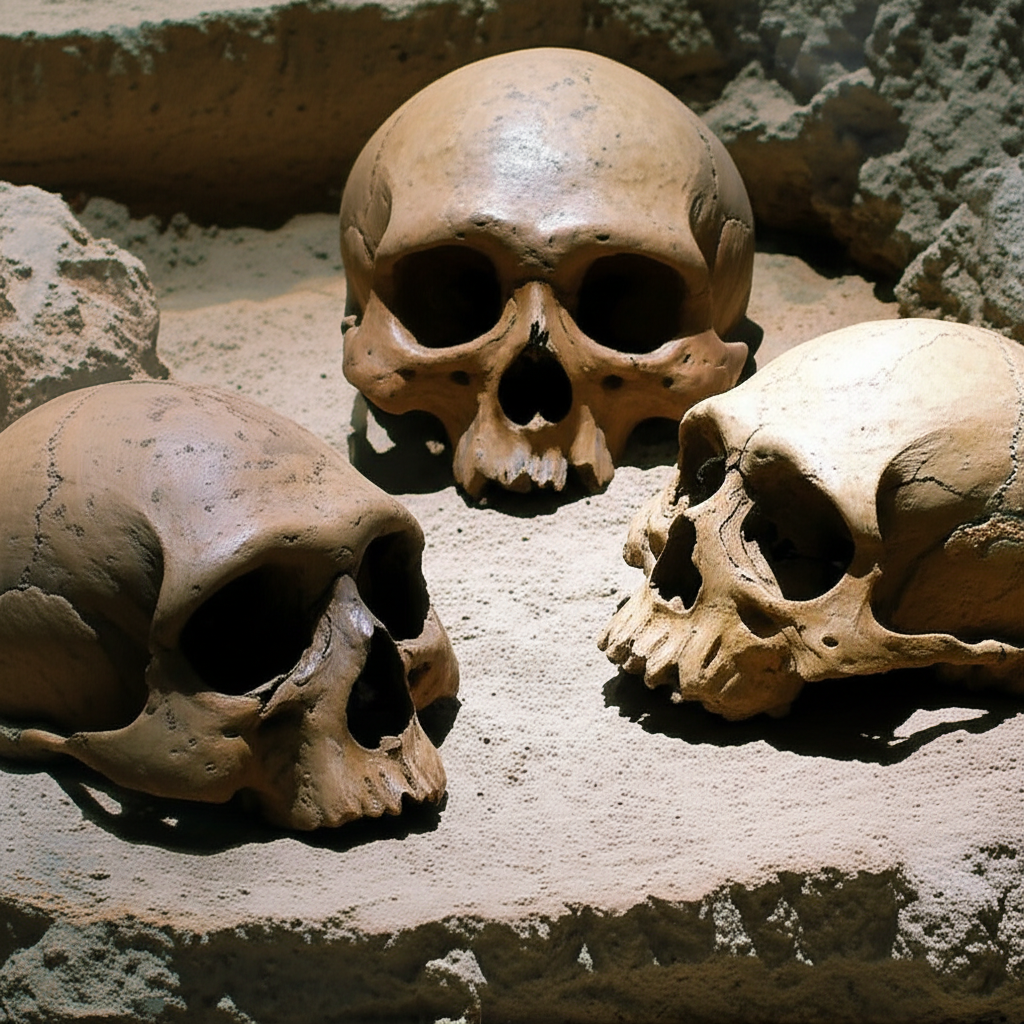
The archaeological excavations conducted at the medieval ruins of Dmanisi, Georgia, yielded evidence that fundamentally altered the established timeline of human migration. Beginning in the early 1990s, paleontologists recovered a series of hominin fossils dating to the Early Pleistocene epoch, approximately 1.8 million years ago. These remains represented the earliest known presence of the genus Homo outside the African continent, effectively challenging previous assumptions regarding the technological capabilities and dispersal patterns of early humans.
The most critical assemblage consisted of five well-preserved crania, collectively offering a unique glimpse into the biology of a single population. The discovery of Skull 5 proved particularly consequential due to its complete condition. This specimen combined a remarkably small braincase with a large, projecting face, features previously thought to belong to separate evolutionary lineages. The coexistence of such distinct physical traits within one specific location and time period compelled researchers to reconsider the taxonomic classification of early human ancestors.
This observed morphological diversity suggested that the variation found among fossils often categorized as distinct species—such as Homo habilis and Homo rudolfensis—might actually reflect natural differences within a single, evolving lineage of Homo erectus. The Dmanisi findings provided a cohesive portrait of early human biology, bridging the anatomical gap between primitive ancestors and later, more robust forms. Consequently, the site established the Southern Caucasus as a pivotal corridor for the initial expansion of humanity into Eurasia, demonstrating that early humans migrated north long before they developed advanced tools or larger brain capacities.


