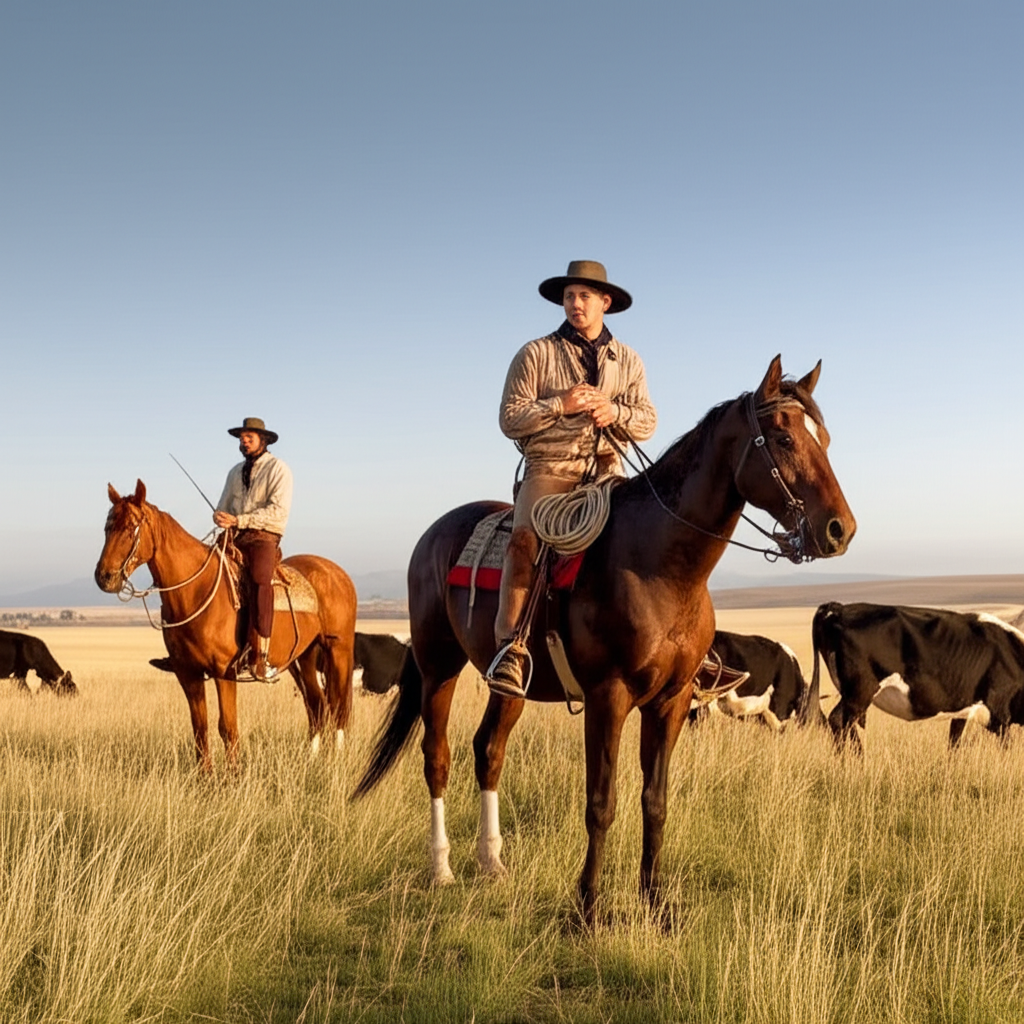
In the vast, borderless expanses of the Pampas, the 18th-century Gaucho existed not merely as a herdsman, but as a highly specialized master of his environment. His daily existence relied entirely on a calculated partnership with the horse. In a landscape lacking natural boundaries or roads, the steed provided essential mobility and tactical advantage. Without a mount, the Gaucho was vulnerable; with it, he commanded the plains with absolute authority.
Survival in this rugged terrain demanded a minimalist but optimized toolkit. The Facon, a large knife carried at the waist, served as a versatile instrument for combat, slaughter, and dining. The Gaucho’s diet was almost exclusively carnivorous, dependent on the vast herds of feral cattle. This consumption of beef provided the necessary energy for a life of constant riding, while the hide of the animal furnished everything from saddle gear to crude shelter.
The pursuit of livestock, known as the Vaquería, required distinct technical precision. Rather than relying on scarce firearms, these horsemen mastered the Boleadoras. This weapon, consisting of weights on cords, allowed for the capture of animals from a distance without damaging the valuable leather. This specific skill set transformed the chaotic hunt into a disciplined operation, ensuring economic survival on the fringes of colonial society.