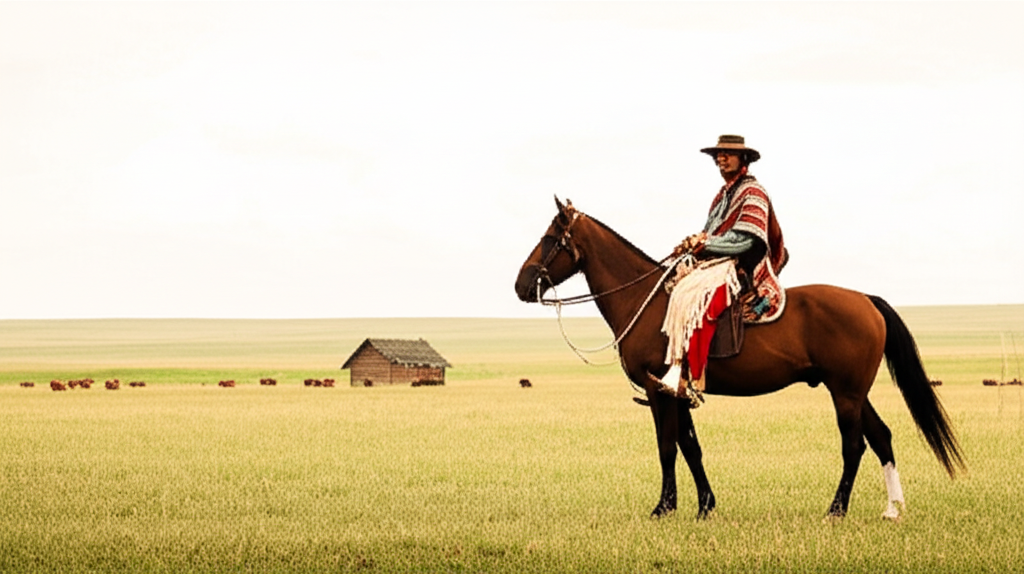
The existence of the gaucho in the 18th century was defined by a rigorous adherence to nomadic principles across the vast, unfenced plains of the Rio de la Plata. Unlike the sedentary agriculturalists of the era, these horsemen optimized their survival through extreme mobility and a symbiotic reliance on the criollo horse. This equine partnership was not merely for transportation but functioned as the central tactical advantage in a hostile, lawless frontier.
Daily survival required the mastery of minimal yet versatile equipment. The facón, a large knife carried at the back, served as a tool for slaughter, a utensil for eating, and a weapon for defense. Combined with the boleadoras, weighted cords used to entrap cattle, the gaucho demonstrated a hunting efficiency that rendered structured farming unnecessary. Their diet consisted almost exclusively of beef and yerba mate, a high-protein, high-caffeine regime that fueled long durations of solitude and physical exertion.
Mobility: The refusal to settle allowed access to shifting resources.
Minimalism: Carrying only essential gear reduced travel fatigue.
* Autonomy: Independence from colonial structures ensured freedom of movement.
While often marginalized by colonial authorities as vagrants, the gaucho effectively regulated the feral livestock population and secured the borders against indigenous incursions. Their lifestyle was a calculated rejection of urban constraints, valuing autonomy above material accumulation. This mastery of the open pampas eventually transformed them from social outcasts into indispensable irregular cavalry during later conflicts.