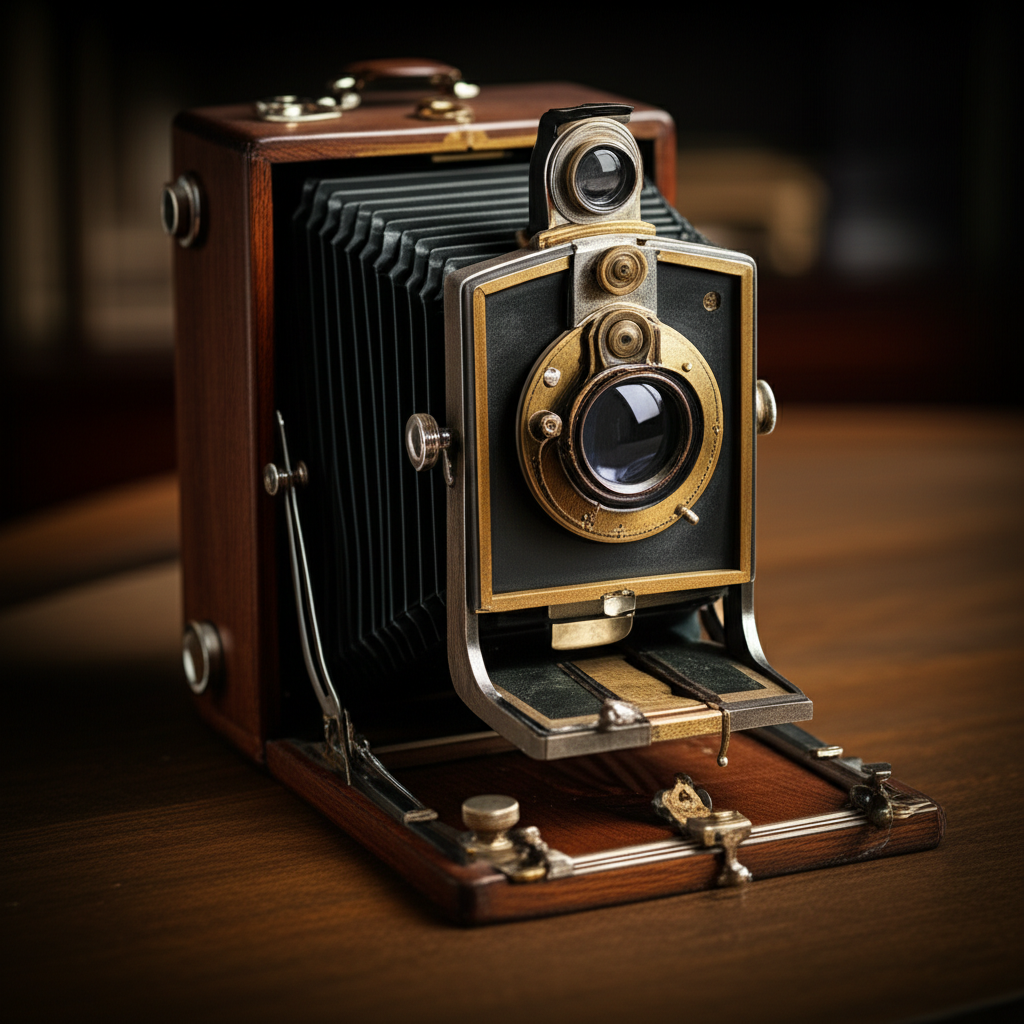
The public unveiling of the Daguerreotype process in August 1839 represented not merely an invention, but the culmination of a decades-long pursuit to permanently fix the images produced by a camera obscura. Louis-Jacques-Mandé Daguerre, building upon his earlier partnership with the late Nicéphore Niépce, achieved a monumental breakthrough. His primary strategic innovation was the discovery of the latent image, an invisible impression formed on a silver iodide-coated plate after a greatly reduced exposure time. This was a critical optimization over Niépce’s heliography, which required exposures lasting several hours.
Daguerre’s refined method was a meticulous sequence of chemical and physical manipulations. A copper plate, clad in silver, was polished to a mirror finish and sensitized with iodine vapor. After exposure in the camera, the plate was developed over heated mercury, a hazardous but effective step that made the latent image visible. The image was then fixed with a salt solution, rendering it permanent. This produced a unique, direct-positive image of astonishing detail.
The French government’s acquisition and subsequent free release of the process to the world—a calculated act of cultural diplomacy—ensured its rapid international adoption. While the Daguerreotype’s inability to be duplicated would ultimately cede its dominance to reproducible negative-positive processes, its initial impact was profound. It democratized portraiture, altered humanity’s perception of reality, and irrevocably established photography as a new medium of art and documentation.