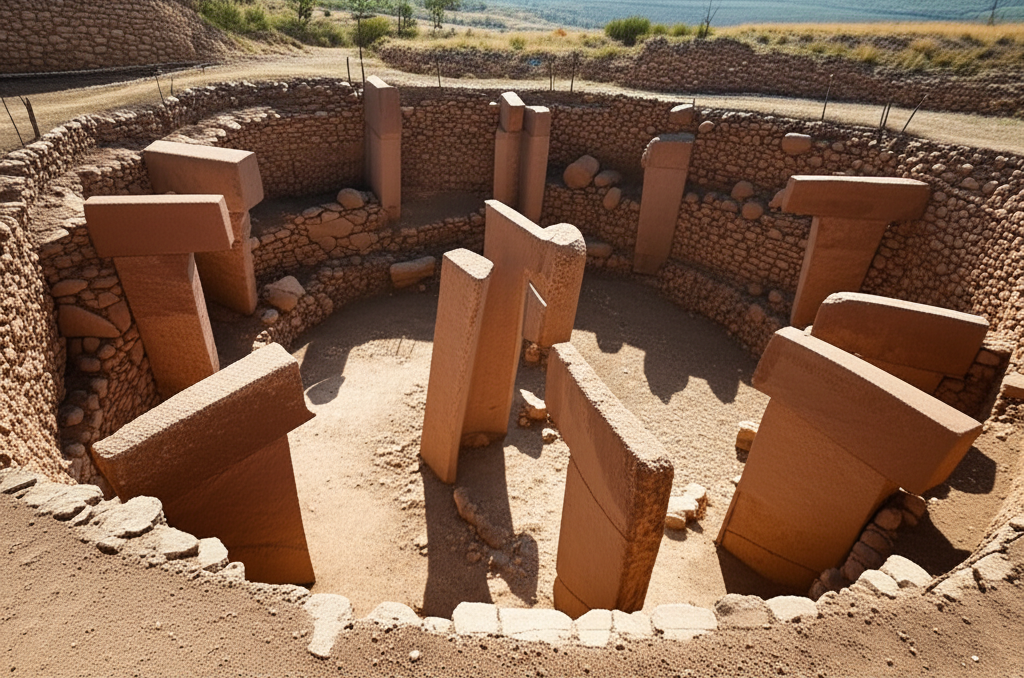
The discovery of Göbekli Tepe fundamentally altered the prevailing academic consensus regarding the origins of civilization. Situated in the Germuş mountain range of modern-day Turkey, this monumental complex predated the widespread adoption of agriculture, suggesting that ritualistic necessity, rather than agrarian stability, served as the primary catalyst for large-scale social organization. The site’s erection during the Pre-Pottery Neolithic required a degree of logistical coordination and labor mobilization previously deemed impossible for mobile hunter-gatherer societies.
The architectural strategy was defined by massive T-shaped pillars, arranged in concentric circular enclosures. These monoliths, some weighing upwards of twenty tons, were quarried from the surrounding limestone bedrock using simple flint tools. The engineering required to transport and erect these stones implied a nascent social hierarchy capable of commanding significant workforces. Unlike later Neolithic settlements, the enclosures lacked evidence of permanent domestic habitation or utility, reinforcing the conclusion that the site operated exclusively as a regional mountain sanctuary.
The relief carvings adorning these stones depicted a menacing fauna of scorpions, vultures, and lions, which likely served an apotropaic function or represented totemic lineages. The construction of these sanctuaries indicated a profound shift in human psychology. To sustain the workforce required for such megalithic engineering, feasting and resource management became essential strategies. Consequently, the urge to worship necessitated the domination of nature, arguably driving the innovation of crop cultivation. Thus, the cathedral was built before the city, establishing a sophisticated spiritual infrastructure that laid the groundwork for the sedentary civilizations that followed.