The Strategic Foundation of Bodiam
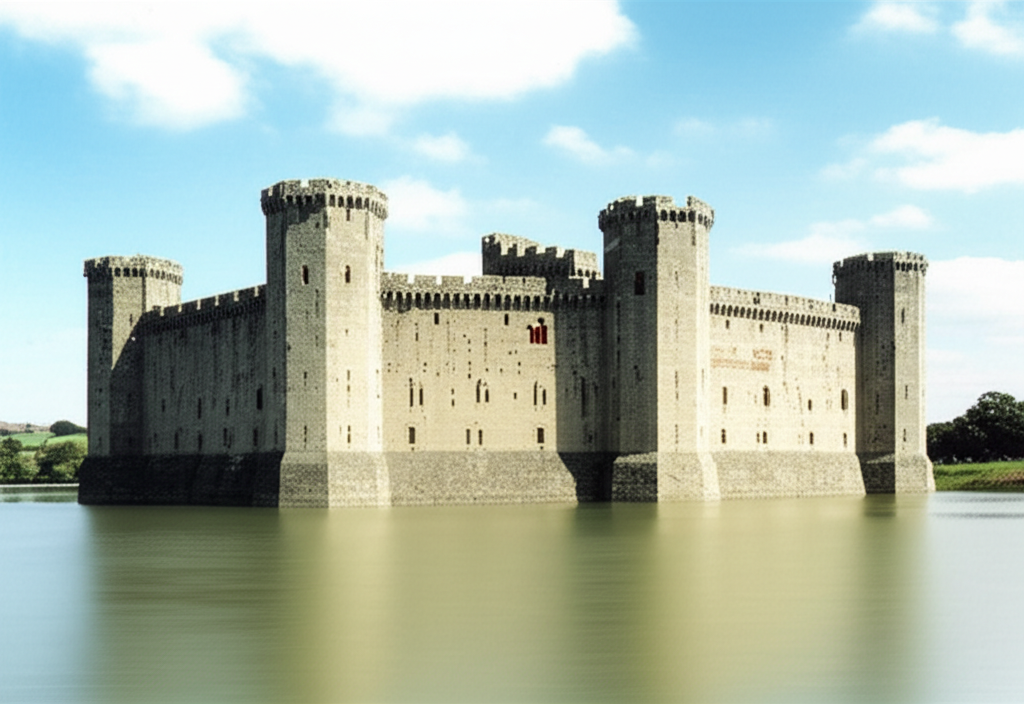
In the turbulent late fourteenth century, amid heightening anxieties regarding a French invasion, the licence to crenellate was granted to Sir Edward Dalyngrigge in 1385. While the royal mandate authorized the fortification of his manor for the defense of the realm, the resulting structure in East Sussex demonstrated a sophisticated evolution in military architecture. Dalyngrigge did not simply reinforce an existing dwelling; he orchestrated the construction of a quadrangular castle that functioned as a self-contained defensive unit. The site selection was deliberate, positioned to control the Rother Valley while utilizing the low-lying terrain to facilitate complex water management systems.
Engineering the Water Defenses
The most significant tactical optimization of Bodiam Castle was the creation of its expansive moat. Unlike the narrow dry ditches common in earlier fortifications, this artificial lake was engineered to be exceptionally broad. This vast expanse of water served multiple strategic purposes:
It rendered standard siege tactics, such as mining beneath the walls, impossible due to the high water table.
It forced artillery and siege engines to remain at a significant distance, reducing their efficacy against the masonry.
To maintain this barrier, engineers diverted local springs to ensure a consistent water level, turning the landscape itself into a primary weapon of defense.
The Synthesis of Power and Design
Beyond its martial utility, the layout revealed a calculated psychological strategy. The approach to the gatehouse required traversal of a long, exposed causeway, leaving visitors or assailants vulnerable to archery fire from the battlements. However, historical analysis suggests that the moat also served as a status symbol. The water acted as a reflecting pool, visually amplifying the height and grandeur of the walls. This dual function—imposing military obstacle and aesthetic display of wealth—cemented Dalyngrigge’s elevated social standing while providing a formidable, if debated, stronghold against foreign aggression.