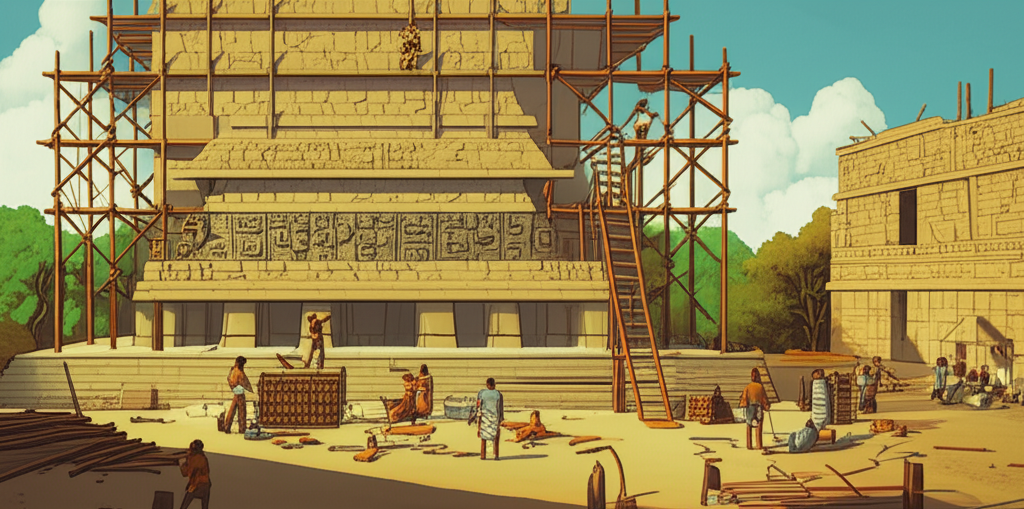
The construction of the Temple of the Inscriptions at Palenque represented a monumental effort in dynastic propaganda and architectural innovation, initiated during the long reign of K’inich Janaab’ Pakal. Unlike many Maya pyramids conceived solely as platforms for superstructures, this project was envisioned from its inception as a funerary monument. The deliberate decision to integrate Pakal’s tomb deep within the pyramid’s base dictated its entire structural design and sequence of construction. This integrated approach, combining a public ritual space with a private royal crypt, was a strategic masterpiece intended to solidify the ruler’s divine connection and eternal legacy.
The engineering required careful orchestration. The builders first constructed the vaulted tomb chamber and the massive sarcophagus lid before beginning the nine-tiered pyramid above it. This required immense foresight, ensuring the immense weight of the structure would not compromise the burial chamber below. A unique feature, a hollow stone psychoduct, was built into the stairway, connecting the tomb directly to the upper temple. This element suggests a sophisticated theological belief, allowing for spiritual communication between the deceased king and the priests performing rituals on the summit.
Finally, the extensive glyphic panels for which the temple is named were meticulously carved and installed within the superstructure. This lengthy text, one of the longest known from the Maya world, was not merely decorative but a calculated act of historical preservation. It chronicled the lineage of Pakal and anchored his reign within a cosmic and historical framework, ensuring that the very structure housing his remains would perpetually broadcast the legitimacy and glory of his dynasty. The Temple of the Inscriptions thus stands as a testament to strategic planning, where architecture, art, and text were masterfully combined to serve a singular political and religious purpose.