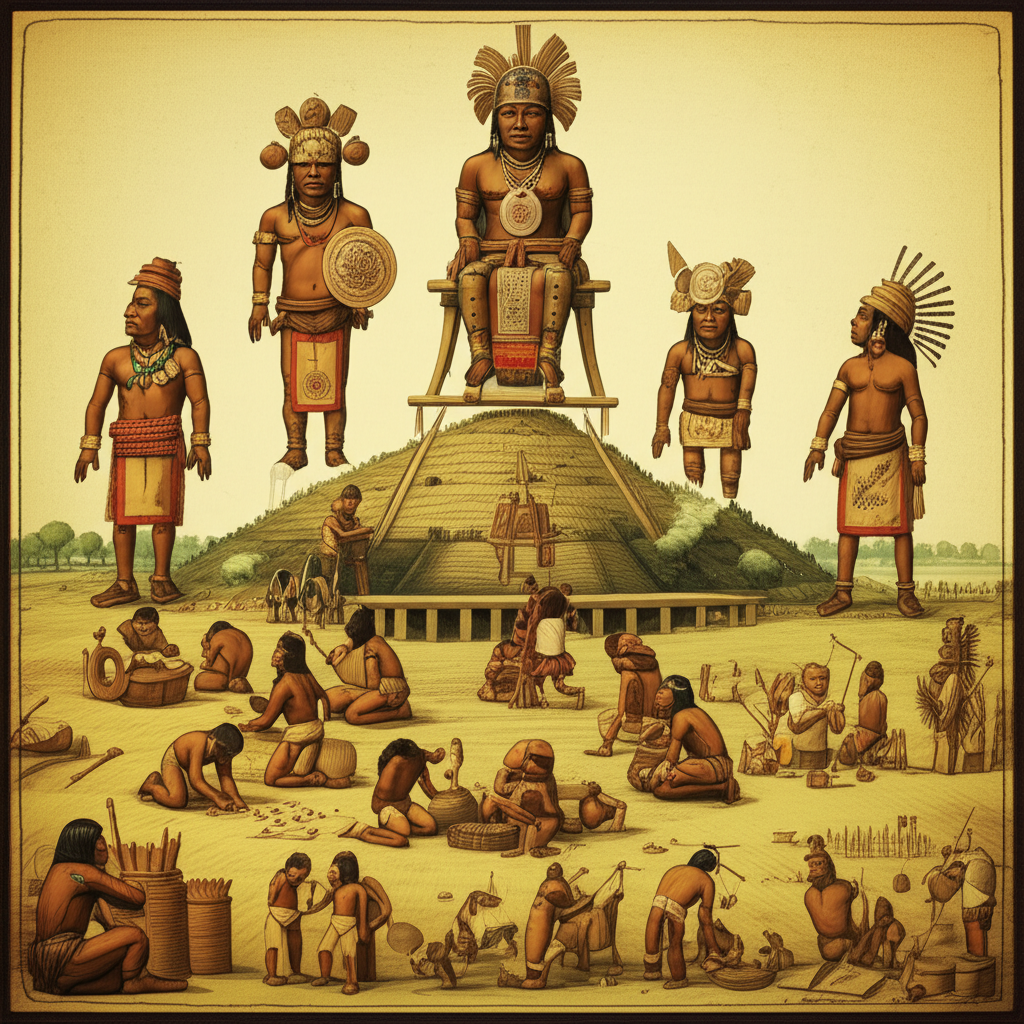
The societal framework of Cahokia represented a highly stratified and centralized system, a hallmark of advanced Mississippian culture. At its apex resided a paramount chief, a figure who wielded immense political and religious authority. This ruler’s elevated status was physically manifested by their residence atop the monumental Monks Mound, separating them from the general populace and reinforcing their divine connection. This strategic arrangement was a powerful instrument of social control, visually communicating the established order to all inhabitants.
Surrounding the central precinct was a distinct elite class, comprising priests, sub-chiefs, and nobles. This group managed the intricate logistics of the city-state, overseeing long-distance trade networks, directing complex ritual ceremonies, and controlling the redistribution of food and exotic goods. Archaeological evidence from high-status burials, rich with rare materials such as copper and marine shell, confirms their privileged position within the hierarchy.
The foundation of this complex social structure was the vast population of commoners. These individuals, including farmers, artisans, and laborers, were the engine of Cahokian society. Their agricultural surplus sustained the urban center, and their labor erected the great mounds and defensive palisades. This clear division of labor, from the farmers in the fields to the specialized craftspeople, allowed for the stability and immense public works projects that defined Cahokia’s golden age, ensuring resources flowed consistently toward the ruling elite.