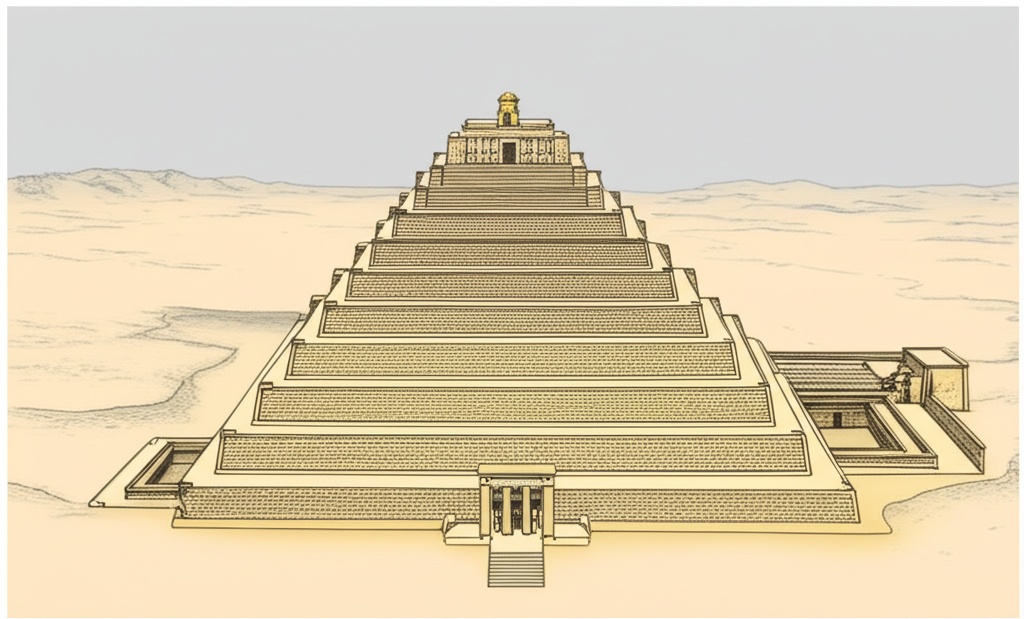
The Step Pyramid of Djoser at Saqqara stands as a pivotal moment in ancient architectural history. Orchestrated by the chancellor Imhotep, the structure’s final form was not the result of a singular design but of an evolutionary process. Construction commenced with a traditional, square mastaba, which was subsequently enlarged through several distinct phases. The decisive innovation came with the decision to stack six such mastabas of decreasing size, one atop the other, creating the first true pyramid. This layered construction method demonstrates a remarkable degree of on-site problem-solving and design adaptation.
This structural revolution was facilitated by a fundamental change in building materials. Imhotep’s genius lay in translating the architectural language of mudbrick into dressed stone, creating a monument of unprecedented permanence. The builders utilized small, manageable limestone blocks, a strategic choice that allowed them to apply established mudbrick construction techniques to the new medium. This pragmatic approach ensured the project’s feasibility. The pyramid itself was merely the focal point of an expansive funerary complex, which included temples, courtyards, and dummy chapels, all enclosed within a massive wall. This complex was a stone replica of the king’s terrestrial palace, intended to serve his needs for eternity.