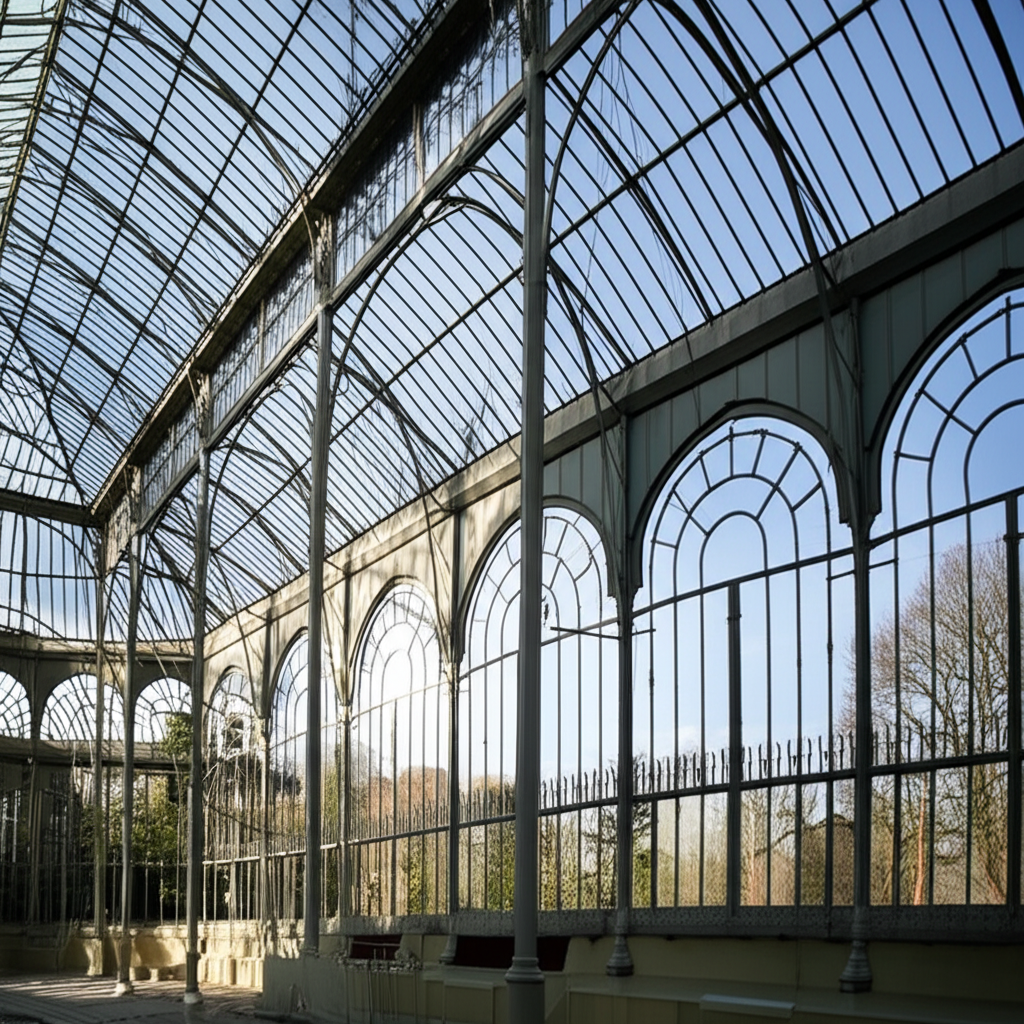
In the months preceding the Great Exhibition of 1851, the commissioners faced a formidable logistical challenge: the rapid construction of a pavilion of unprecedented scale. The solution emerged not from traditional masonry, but from the innovative vision of Joseph Paxton. His design for the Crystal Palace circumvented conventional building constraints through the meticulous application of modular architecture. By relying on standardized components—primarily cast iron, wrought iron, and vast expanses of plate glass—the ambitious project advanced from a rudimentary sketch to a monumental edifice in a mere nine months.
The architectural triumph of the structure rested largely upon its structural optimization. Paxton engineered a self-supporting grid system that minimized the necessity for internal load-bearing walls. This framework facilitated rapid assembly on the grounds of Hyde Park, as identical structural units arrived on-site ready for immediate integration. The implementation of a highly mechanized production chain allowed for precise quality control and swift installation. Consequently, the building process was effectively transformed from traditional craftsmanship into a predictable system of industrial assembly.
Ultimately, the disassembly and subsequent relocation of the pavilion to Sydenham Hill underscored the inherent flexibility of this standardized approach. The edifice did more than merely house an international exhibition; it redefined architectural methodology. By proving the efficacy of prefabrication and rigorous engineering, the project established a profound historical precedent, permanently altering the trajectory of structural design and large-scale public construction.