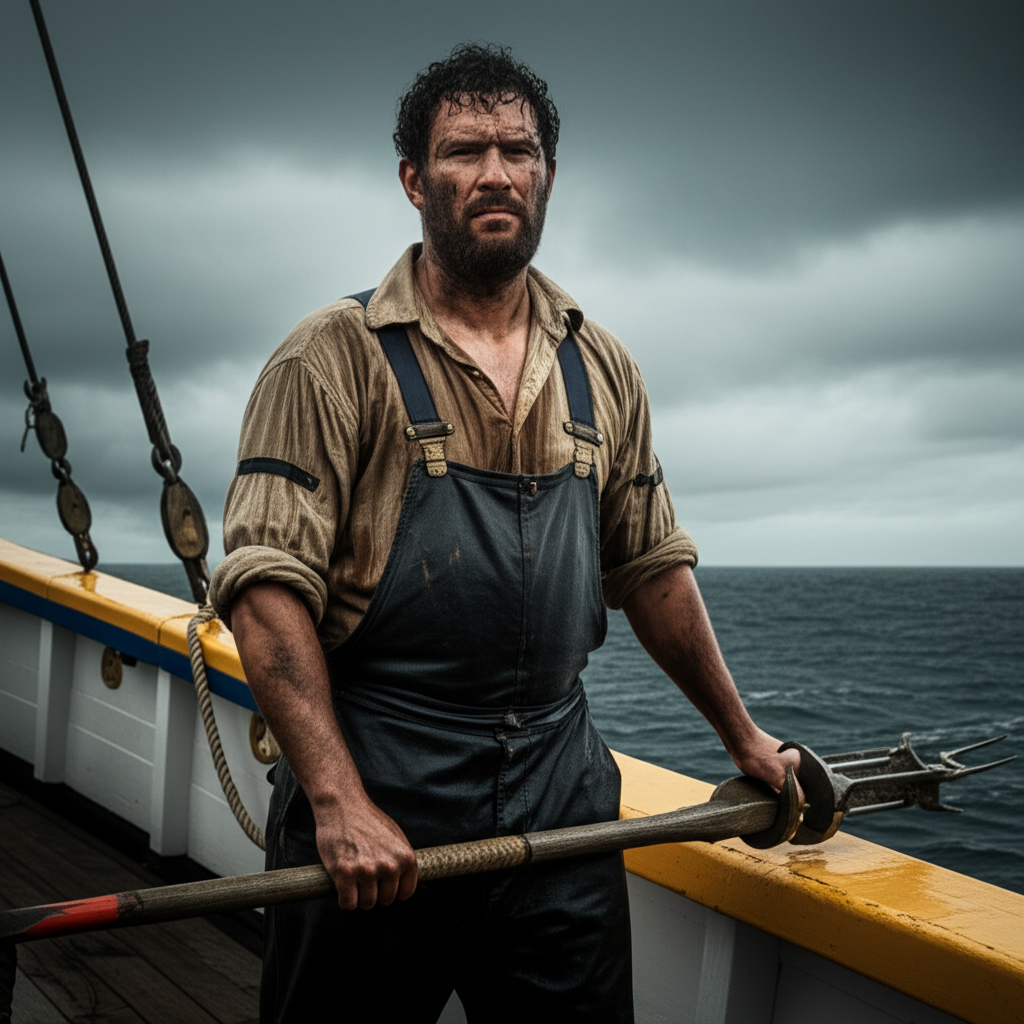
The daily existence aboard a catcher vessel was dictated by an unrelenting pursuit of operational efficiency. Serving as the primary strike force for the broader whaling fleet, the crew adhered to a rigorous regimen governed by the migration patterns of their targets. Upon the sighting of a spout, the vessel’s course was immediately optimized for a tactical intercept, requiring precise coordination between the bridge and the foredeck. The harpooner, positioned at the bow, evaluated trajectory, vessel pitch, and ocean swells to maximize the probability of a swift, lethal strike.
Success in the whale oil industry depended entirely on the conservation of time and resources. Navigators implemented calculated maneuvering strategies to exhaust the quarry while minimizing the distance the ship had to traverse. Once the explosive harpoon found its mark, the crew initiated the arduous process of securing the carcass. Winch operators carefully calibrated line tension to prevent the severing of the tether, a critical operational failure that resulted in the immediate loss of valuable raw material and squandered fuel.
Following the successful retrieval, the crew injected the carcass with compressed air to ensure sufficient buoyancy and flagged it for subsequent collection by the processing factory ship. There was no cessation of labor; the men immediately resumed their designated patrol grid. This cyclical process of tracking, striking, and securing demanded immense physical endurance and tactical foresight, maintaining a continuous flow of resources to satiate the global industrial demand.