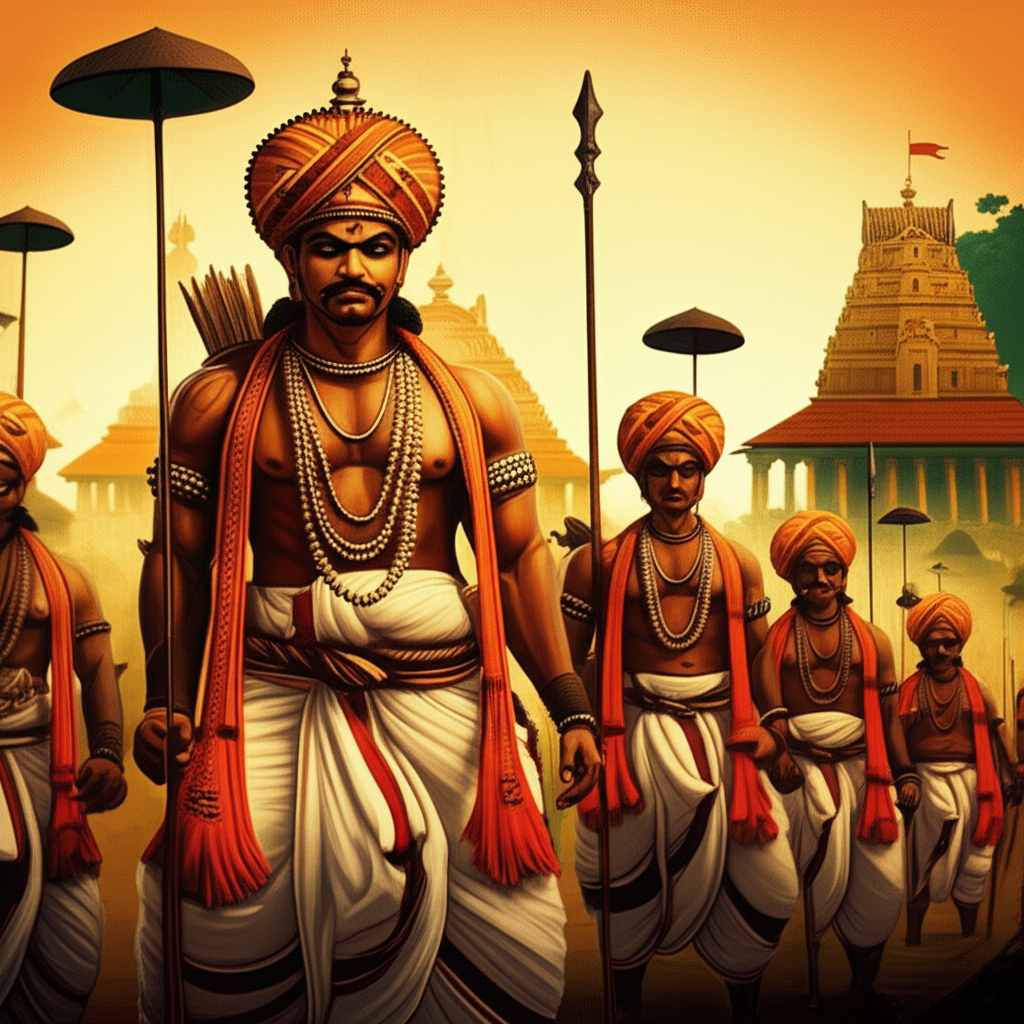
The martial prowess of the Nayar warriors of Kerala was fundamentally intertwined with their unique social organization. Governed by the Marumakkathayam, a strict matrilineal system of inheritance, the society ensured that property and lineage descended exclusively through the female line. This legal framework was not merely a domestic arrangement; it was a deliberate strategic mechanism. By absolving male warriors of direct paternal responsibilities and the daily burdens of land management, the system freed them to dedicate their lives entirely to military service and the mastery of Kalaripayattu, the indigenous martial art.
The foundational unit of this structure was the Taravad, a large joint-family estate administered by the eldest male, but owned collectively through the maternal bloodline. Marriage laws further optimized the sociopolitical stability of the warrior class. The institution of Sambandham constituted a fluid marital alliance rather than a binding economic contract. These non-binding unions allowed warriors to form strategic alliances across different chiefdoms without permanently fracturing the economic integrity of their native estate or complicating inheritance patterns.
Consequently, the customary laws governing these communities functioned as a sophisticated apparatus for statecraft and martial readiness. The deliberate prevention of conventional nuclear family ties forged a decentralized yet fiercely loyal militia, untethered by the standard anxieties of patriarchal succession. Through this intricate balance of matrilineal property rights and martial obligations, the regional sovereigns maintained a perpetual standing army deeply embedded within the agrarian landscape, ensuring political endurance and military supremacy across the Malabar Coast for centuries.