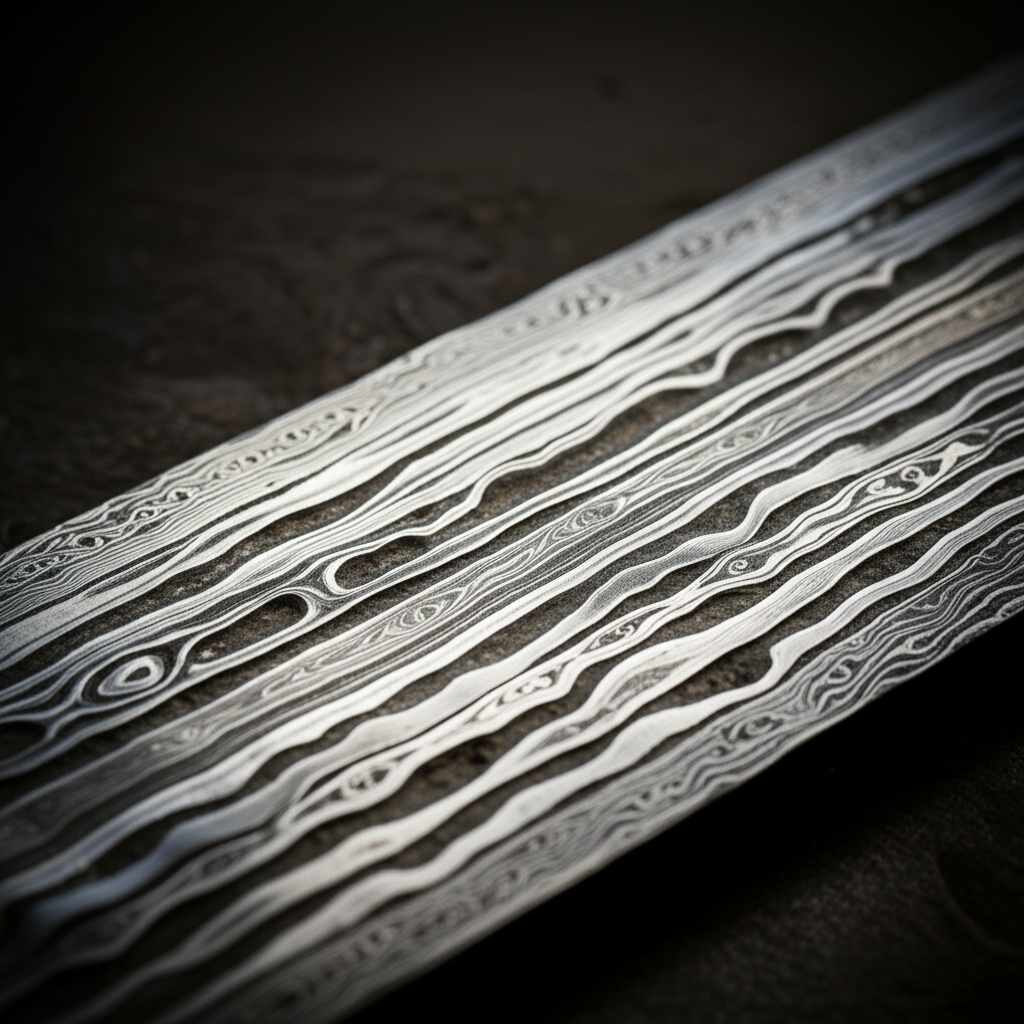
During the medieval period, the production of Damascus steel represented the pinnacle of pre-modern metallurgy. Smiths in the Levant forged these exceptional blades utilizing Wootz steel ingots imported from the Indian subcontinent. The strategic advantage of these weapons lay in their precise carbon content, which typically ranged from one to nearly two percent, yielding a remarkable balance of hardness and flexibility.
The forging process demanded exacting thermal management. Artisans subjected the high-carbon ingots to repeated cycles of heating and careful hammering. This meticulous technique forced the precipitation of cementite within a softer iron structure, producing the distinctive undulating patterns known as watermarks. Optimization of the blade’s resilience relied not merely on the composition of the ore, but on the precise temperature control maintained within the forge. Overheating fractured the brittle internal structures, while insufficient heat prevented proper malleability.
By the late eighteenth century, the original methodology vanished from the historical record. The decline of this technique was largely a consequence of disrupted trade routes and the depletion of specific trace elements—namely vanadium and tungsten—present in the original Indian ores. Without these crucial impurities to guide the internal structural alignment during the cooling phase, the intricate separation required to produce the characteristic patterning failed to materialize. Consequently, later generations of smiths could no longer replicate the authentic metallurgical composition, reducing subsequent efforts to mere pattern-welded imitations.