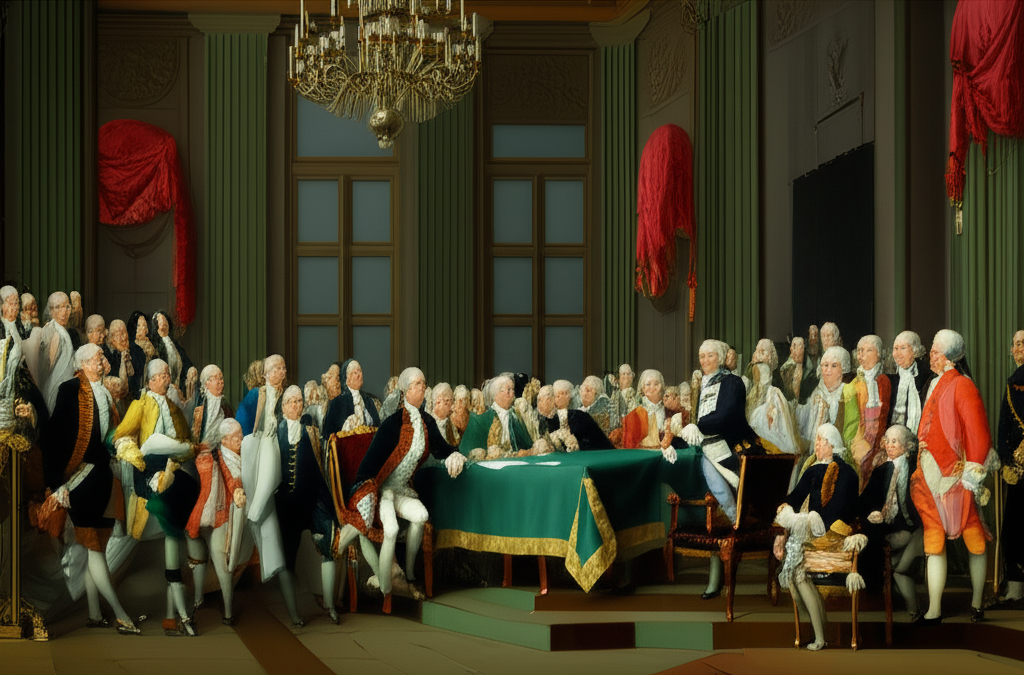
The year 1648 marked a definitive fracture in the medieval political order. With the signing of the Peace of Westphalia, the protracted bloodshed of the Thirty Years’ War concluded, signaling the decline of the overarching dominance of the Holy Roman Empire and the Papacy over temporal affairs. This diplomatic congress did not merely cease hostilities; it engineered a new geopolitical architecture rooted in distinct territoriality and effectively secularized statecraft.
The treaties of Münster and Osnabrück codified the principle of Westphalian Sovereignty. By recognizing the exclusive right of a ruler to govern the internal affairs of their territory without external interference, the signatories dismantled the transnational authority previously claimed by the Church. The strategic brilliance of this arrangement lay in its pragmatic approach to religious conflict. The confirmation of the cuius regio, eius religio doctrine allowed princes to determine the religious adherence of their own states, thereby transforming faith from a cause of pan-European crusade into a matter of domestic policy.
Consequently, the modern Nation-State emerged from these negotiations as the primary unit of international relations. Power was no longer derived from a nebulous divine hierarchy but from the state’s monopoly on force, law, and taxation within defined borders. This paradigm shift established the foundations of modern international law, creating a balance of power system intended to prevent any single entity from achieving hegemony in Europe. The peace established a precedent where diplomatic congress, rather than brute force, became the preferred mechanism for resolving disputes between sovereign entities.