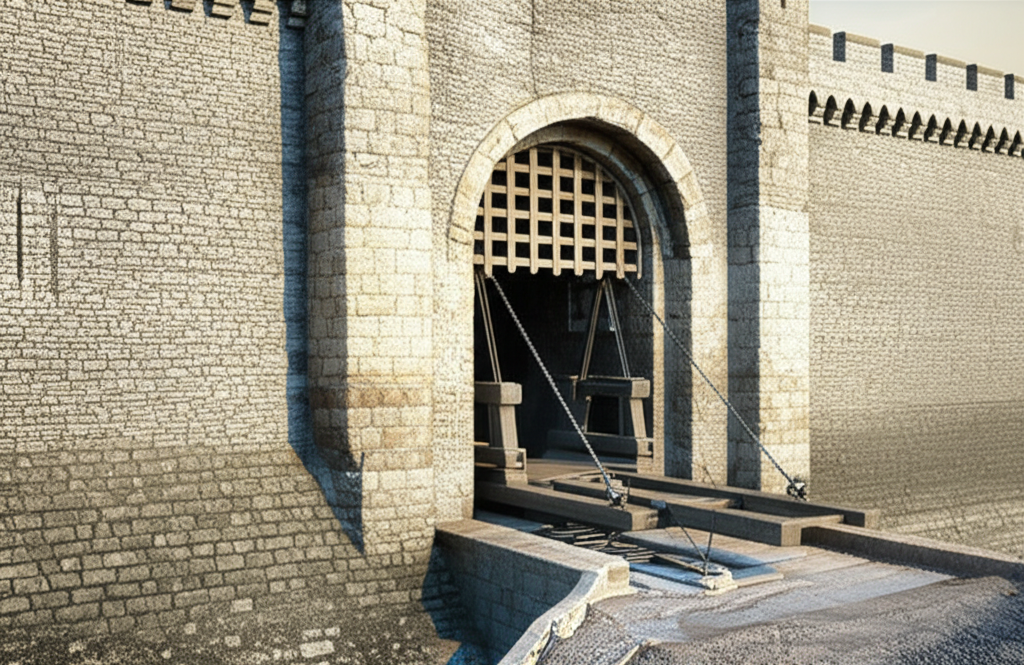
The evolution of fortification architecture reached a critical juncture with the refinement of the Pont du Milieu. Medieval engineers recognized that the entrance remained the most vulnerable point of any citadel. Consequently, the static causeways of earlier eras gave way to sophisticated, articulated spans designed to isolate the inner ward at a moment’s notice. This structure was not merely a passage but a calculated instrument of denial.
The engineering genius lay in the precise calibration of the Bascule mechanism. Unlike simple chained platforms that required immense torque to lift via windlass, the Pont du Milieu utilized a central pivot point balanced by a heavy Counterweight. This internal mass descended into a specifically constructed masonry pit as the bridge rose, allowing a small garrison to manipulate tons of timber and iron with minimal exertion. This optimization ensured that reaction times during a surprise assault were measured in seconds rather than minutes.
Strategically, the raising of the bridge served a dual function. Primarily, the vertical deck integrated flush with the gatehouse facade, reinforcing the gate protection. Simultaneously, the descent of the counterweight exposed a precipitous drop, effectively creating an impassable Chasm immediately before the threshold. This design prevented sappers from utilizing the bridge’s own footing to undermine the walls or place charges against the gate. The Pont du Milieu represented the synthesis of mechanical efficiency and defensive ruthlessness, turning the castle’s primary access point into its most formidable trap.