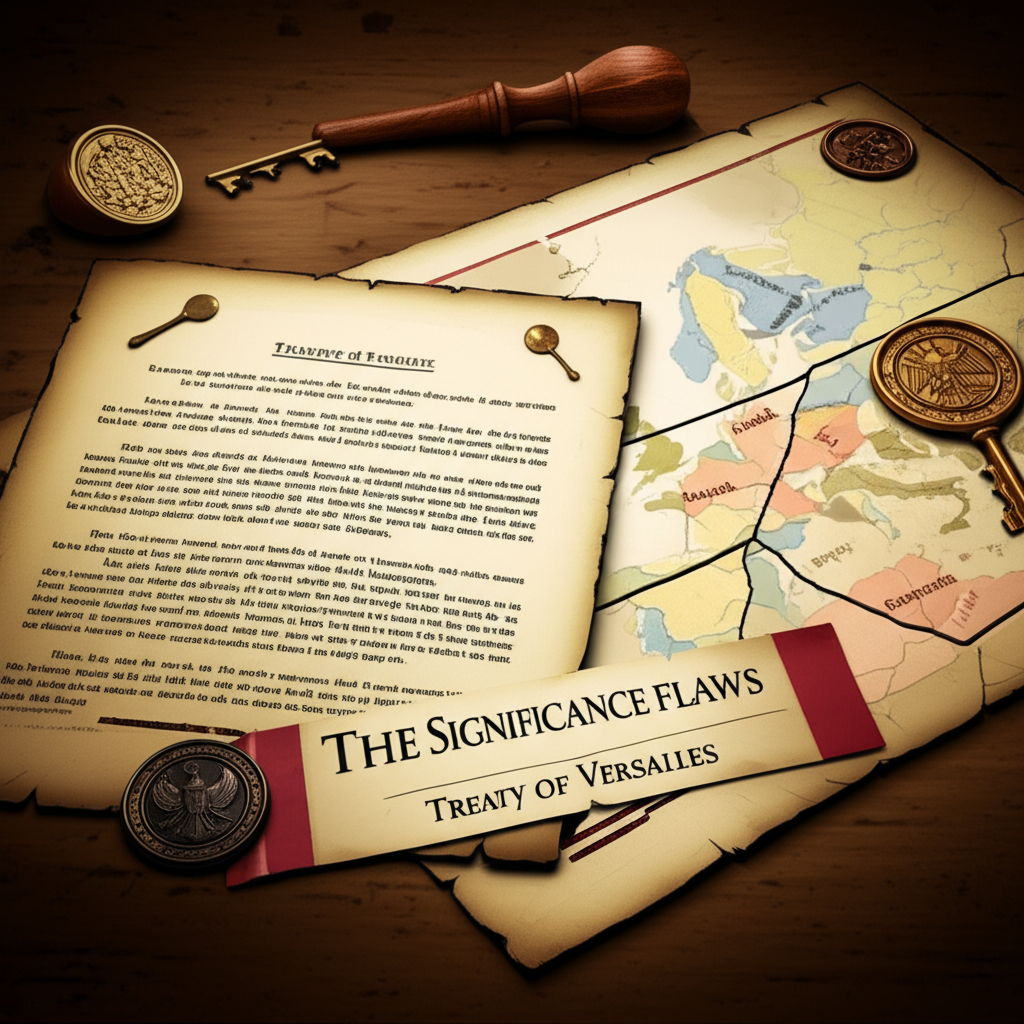
The signing of the Treaty of Versailles in June 1919 marked a definitive, albeit contentious, conclusion to the Great War. Orchestrated within the Hall of Mirrors, the agreement sought to dismantle the Central Powers while constructing a new diplomatic framework. However, the document was less a coherent strategy for lasting peace and more a fractured compromise born of conflicting national interests among the Allied victors.
Strategically, the treaty suffered from a fatal paradox. It imposed severe penalties, most notably through the War Guilt Clause and the demand for crippling reparations, intended to neutralize German military capability. Yet, the enforcement mechanisms remained insufficient to permanently suppress a nation with Germany’s vast industrial potential. The architects of the peace created a geopolitical environment that fostered deep resentment without ensuring long-term security, effectively humiliating Berlin while leaving its structural power base largely intact.
Furthermore, the exclusion of key powers from the negotiations undermined the legitimacy of the new order. While President Woodrow Wilson championed the League of Nations as a vehicle for collective security, the subsequent refusal of the United States to ratify the agreement rendered the organization toothless from its inception. Ultimately, the settlement redrew the map of Europe but failed to resolve the underlying balance-of-power struggles, laying the volatile groundwork for the eruption of global conflict just two decades later.