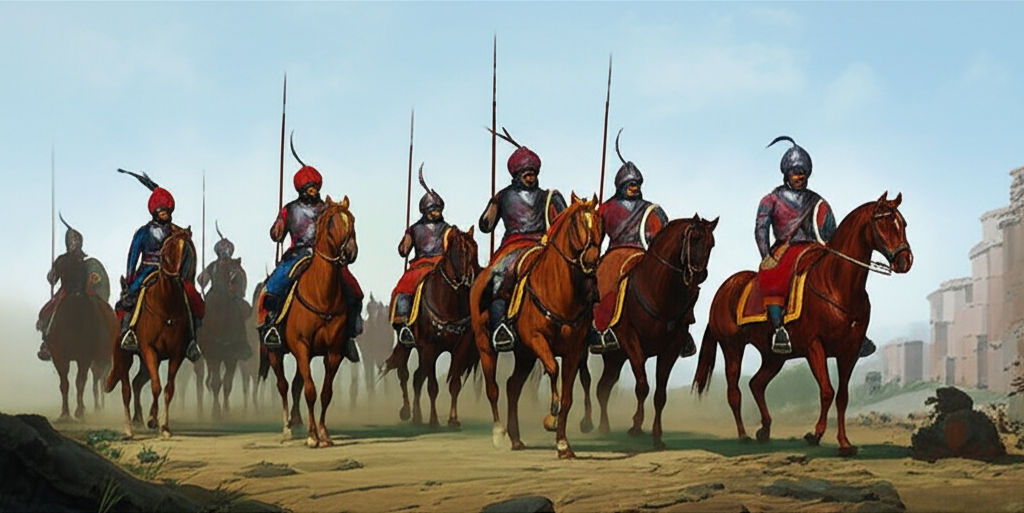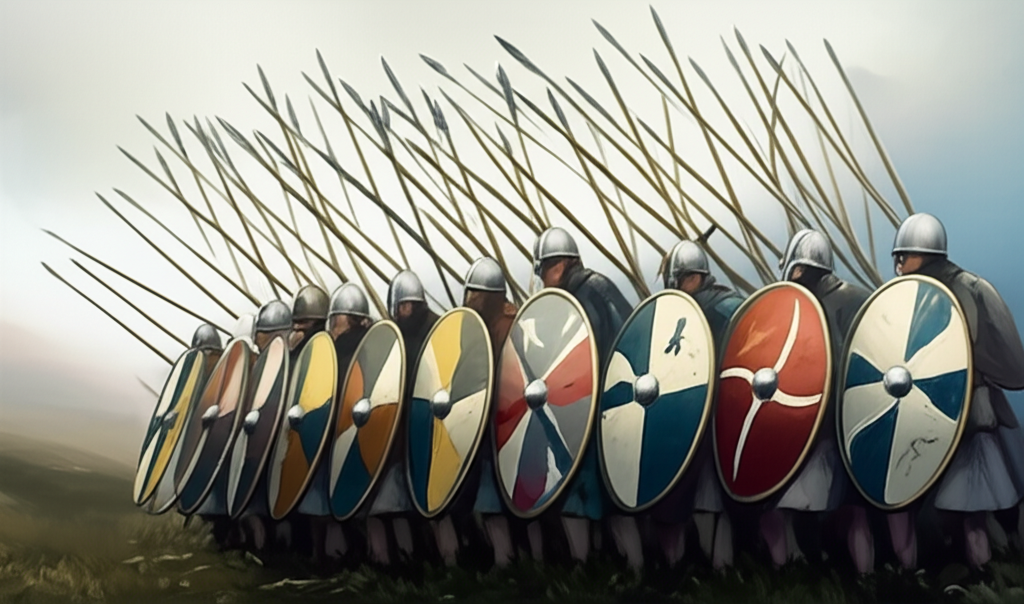
The deployment of the Schiltron during the Wars of Scottish Independence marked a pivotal evolution in medieval infantry tactics. Initially utilized by William Wallace, most notably at the Battle of Falkirk in 1298, the formation functioned primarily as a static fortress. These dense, circular arrangements of spearmen, with pikes leveled outward in tiered rows, created an impenetrable hedge intended to break the momentum of the dominant English heavy cavalry. However, the defensive rigidity of Wallace’s rings proved to be a critical vulnerability; once the supporting Scottish cavalry fled and the archers were dispersed, the immobilized infantry became easy targets for English missile fire.
Under the command of Robert the Bruce, the tactical application of the spear formation underwent a radical transformation. Bruce recognized that for the infantry to succeed, they required offensive capability and rigorous drill. By the Battle of Bannockburn in 1314, the Scots had mastered the necessary discipline to maneuver the schiltron as an offensive unit. Rather than remaining in defensive circles, Bruce reorganized his troops into rectilinear blocks capable of advancing upon the enemy in close order.
This optimization allowed the Scots to dictate the terms of engagement. By marching forward, the mobile spear blocks compressed the English forces against the natural constraints of the terrain, specifically the streams and marshland, effectively neutralizing the enemy’s numerical superiority and cavalry advantage. The success of these formations relied heavily on the psychological deterrent presented to the horses, which would not charge a solid wall of steel points. By enforcing strict cohesion, the Scottish leadership demonstrated that disciplined foot soldiers could overcome the era’s premier armored knights.