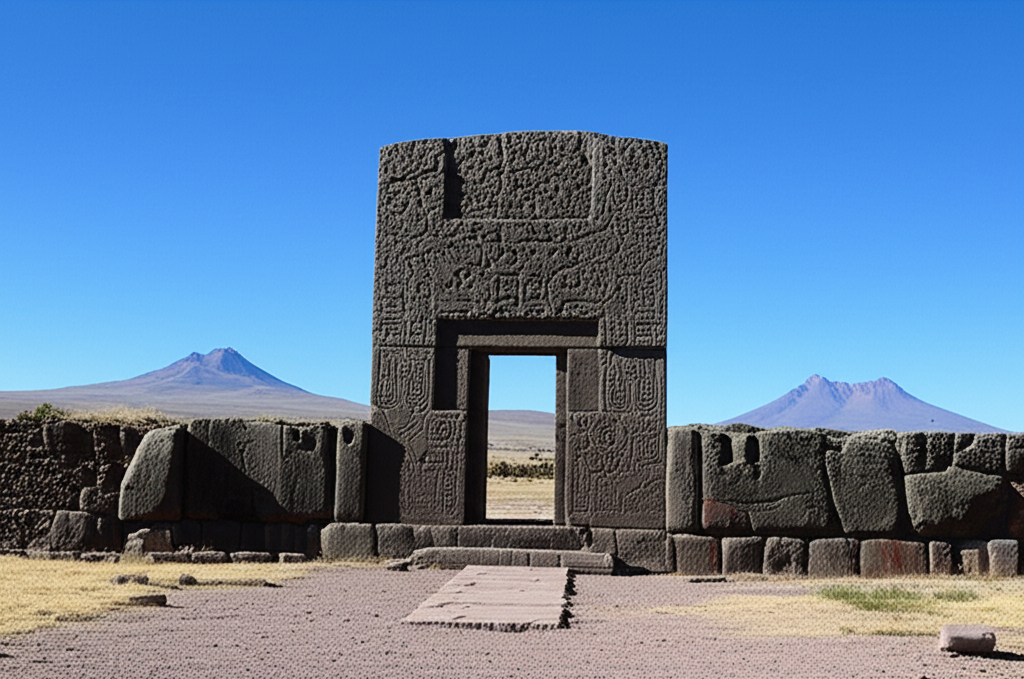
Situated on the desolate Altiplano near Lake Titicaca, the polity of Tiwanaku emerged not merely as a settlement, but as a dominant hegemon of the south-central Andes. Between 500 and 1000 AD, this civilization orchestrated a sophisticated command over one of the world’s most unforgiving environments. Rather than relying solely on military conquest, the state utilized a strategy of religious integration and economic interdependence to bind distinct ethnic groups into a cohesive sphere of influence.
The foundation of this expansive power lay in the optimization of the suka kollus, or raised field systems. These hydraulic engineering feats mitigated the risks of frost and drought inherent to the high altitude. By manipulating local hydrology to create thermal heat sinks, the state generated massive agricultural surpluses. This abundance supported a dense urban population and fueled the vertical archipelago model, allowing the capital to command resources from the Pacific coast to the Amazonian lowlands without the need for contiguous territorial borders.
Tiwanaku’s influence spread through the export of state ideology and iconography, notably the Staff God, rather than direct administrative subjugation. To maintain this “soft power,” the state relied on distinct mechanisms:
Caravans managed extensive trade networks, distributing ceramics and textiles that served as status symbols for local elites.
Monumental architecture, such as the Akapana pyramid, reinforced the city’s status as a pilgrimage center.
Consequently, the empire established a protracted era of stability. By prioritizing agricultural intensification and ritual centrality over the costly maintenance of a standing army, the state achieved a level of integration that later Andean civilizations struggled to replicate.