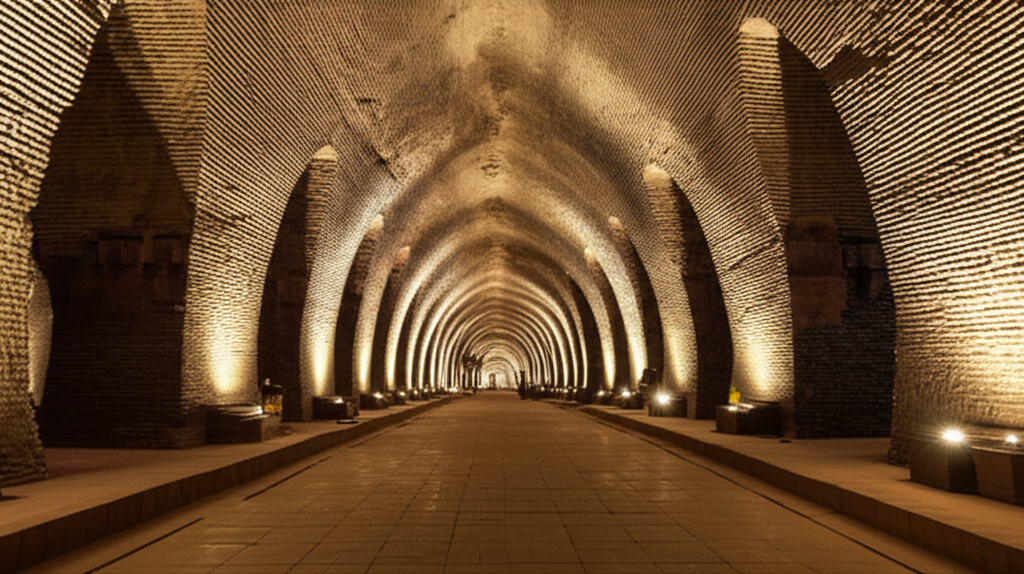
The excavation of the Longyou Caves in 1992 revealed an archaeological enigma beneath the surface of Phoenix Hill in Zhejiang Province. Unlike natural karst formations, these subterranean chambers evidenced a deliberate, grand-scale engineering project executed with a precision that defied the presumed technological limitations of the era. The removal of nearly one million cubic meters of siltstone suggested a logistical operation of imperial magnitude, yet the specific intent behind this colossal undertaking remained obscured by the passage of two millennia.
Builders employed a uniform method of excavation, leaving distinctive, parallel chisel marks across every surface, from the towering ceilings to the intricate pillars. These striations indicated not merely aesthetic preference, but a standardized, industrial-grade methodology designed for efficiency and stability. The structural integrity of the caverns relied upon an advanced understanding of load distribution, utilizing massive fish-tail pillars to support the heavy overburden. Despite centuries of containment by floodwaters and regional seismic shifts, the chambers maintained their precise geometry, a testament to the sophistication of ancient geotechnical engineering.
The most confounding aspect of this discovery was the absolute silence of the historical archive. Chinese historiography, renowned for its meticulous documentation of public works and dynastic achievements, offered no mention of the complex. No imperial records or local gazetteers chronicled the mobilization of the vast labor force required for such extraction. Consequently, historians were left to analyze the physical evidence alone, concluding that the caves represented a specific, potentially clandestine strategic utility that vanished alongside its architects.