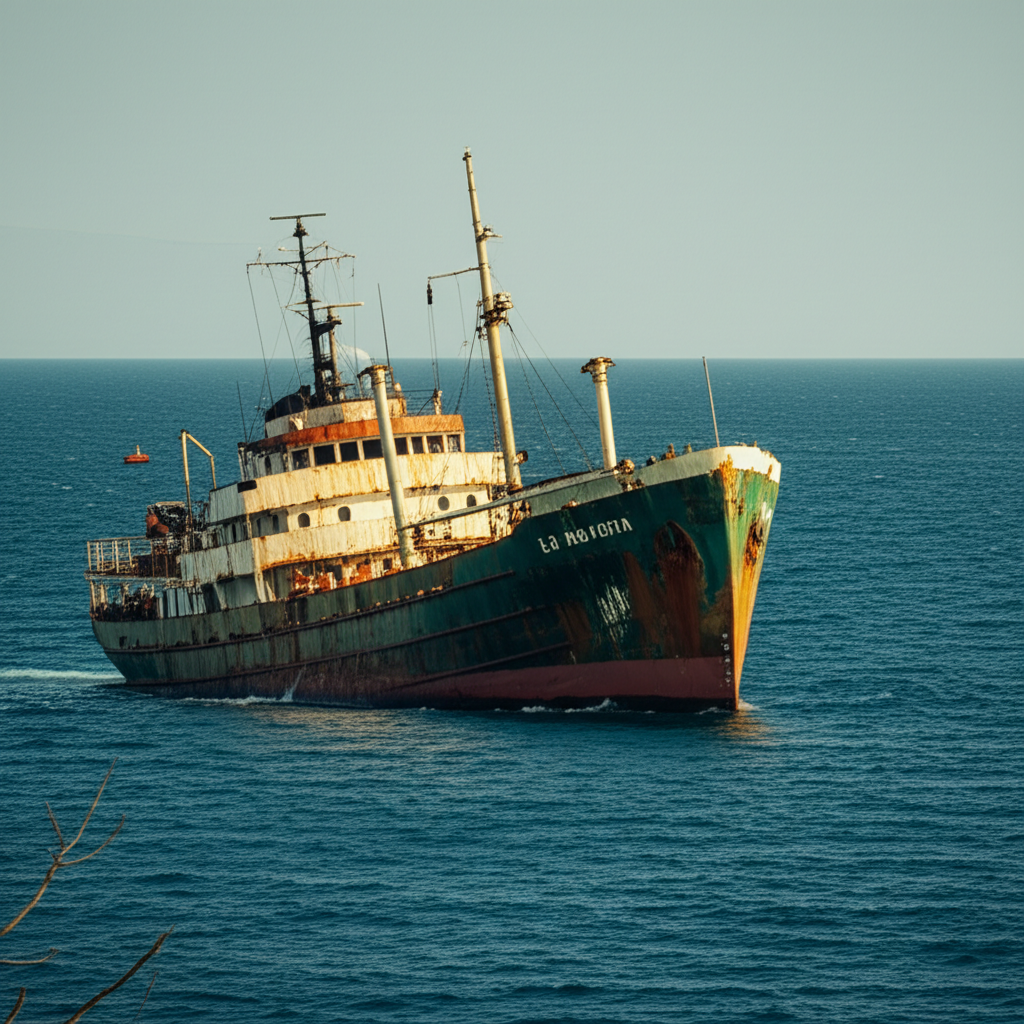
In October 1955, the maritime chronicles of the South Pacific were marked by the perplexing discovery of the MV Joyita, a merchant vessel found drifting derelict north of Fiji. The ship, which had departed Samoa for the Tokelau islands weeks earlier, was discovered listing heavily but remained stubbornly afloat. Despite the vessel’s survival, all twenty-five passengers and crew members had vanished, leaving behind a scene that defied immediate logical reconstruction.
The investigation revealed a vessel in disarray but not in peril of sinking. The ship’s specific structural design featured a cork-lined hull, rendering it virtually unsinkable. This engineering detail highlights the tragic strategic failure of the incident: the decision to abandon the ship. Evidence suggested that Captain Thomas Miller and the occupants fled the vessel for life rafts, a choice that likely doomed them to the open ocean rather than offering salvation. Had they remained aboard the waterlogged but buoyant craft, rescue would have been inevitable.
Detailed inspections of the engine room exposed makeshift repairs and a corroded cooling pipe, indicating that mechanical negligence played a pivotal role in the disaster. It appears that a sudden ingress of water triggered a panic that overrode sound maritime judgment. The radio was tuned to the international distress frequency, yet the aerial was broken, rendering any calls for aid futile.
Ultimately, the fate of the Joyita serves as a grim historical lesson in crisis management. The physical evidence pointed not to a sudden cataclysm, but to a progressive breakdown of leadership and composure. While the ship itself weathered the elements, the crew’s premature departure into the vast Pacific resulted in a total loss of life, shrouding the event in permanent silence.