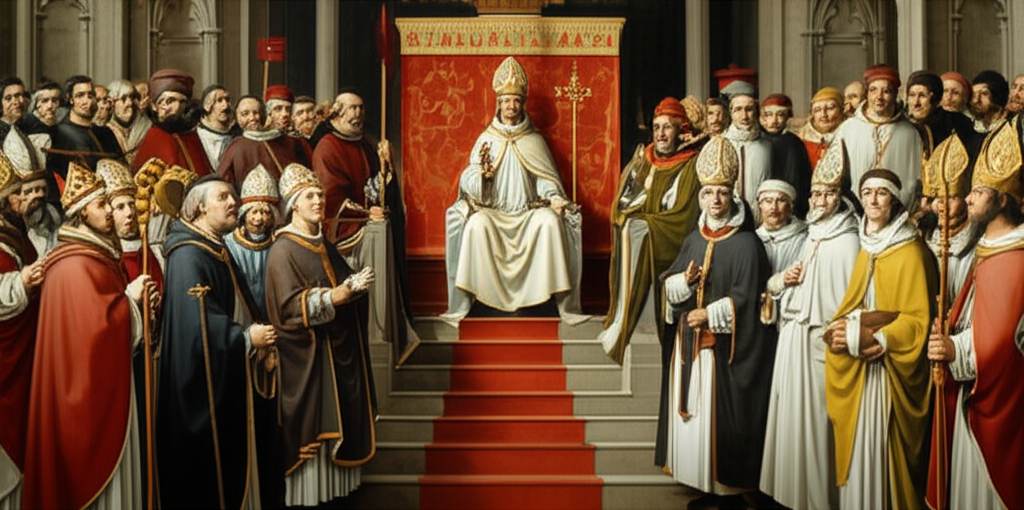
The Western Schism represented a profound fracture within medieval Christendom, creating a diplomatic and spiritual crisis that defied conventional resolution. By 1414, the concurrent existence of three rival pontiffs—based in Rome, Avignon, and Pisa—necessitated a radical departure from traditional ecclesiastical governance. Under the significant pressure of Emperor Sigismund, the Council of Constance convened not merely to negotiate, but to fundamentally restructure the hierarchy of power to save the institution.
The assembly’s most significant strategic maneuver was the operational adoption of Conciliarism, a doctrine asserting that a general council held authority superior to the papacy itself during times of emergency. This pivot was legally codified in the decree Haec Sancta. By establishing this constitutional foundation, the delegates effectively bypassed the deadlock of papal infallibility, granting themselves the unprecedented mandate to judge, discipline, and depose the contending claimants.
To optimize the decision-making process and prevent the dominance of the numerous Italian bishops, the Council introduced the system of voting by Nations. This structural innovation balanced the distinct political interests of England, France, Germany, Italy, and later Spain, ensuring a consensus that carried broad secular and religious weight across Europe.
The resolution required surgical political precision. The Pisan claimant, John XXIII, was formally deposed after a failed attempt to flee. The Roman claimant, Gregory XII, agreed to abdicate voluntarily, a strategic move that retroactively legitimized the Council’s convocation. The Avignon claimant, Benedict XIII, refused to yield and was subsequently declared a schismatic and marginalized. This systematic dismantling of the tripartite claim paved the way for the 1417 election of Martin V, finally restoring unity to the church through calculated diplomacy and legal innovation.