The arrival of the Gallowglass (gallóglaigh) in the mid-thirteenth century marked a decisive shift in the military architecture of medieval Ireland. Emerging from the Norse-Gaelic clans of the Hebrides, these elite mercenaries introduced a level of professional discipline and heavy armament that was previously absent from native Gaelic levies. Their integration transformed Irish warfare from fluid, hit-and-run skirmishes into sustained campaigns capable of challenging Anglo-Norman dominance.
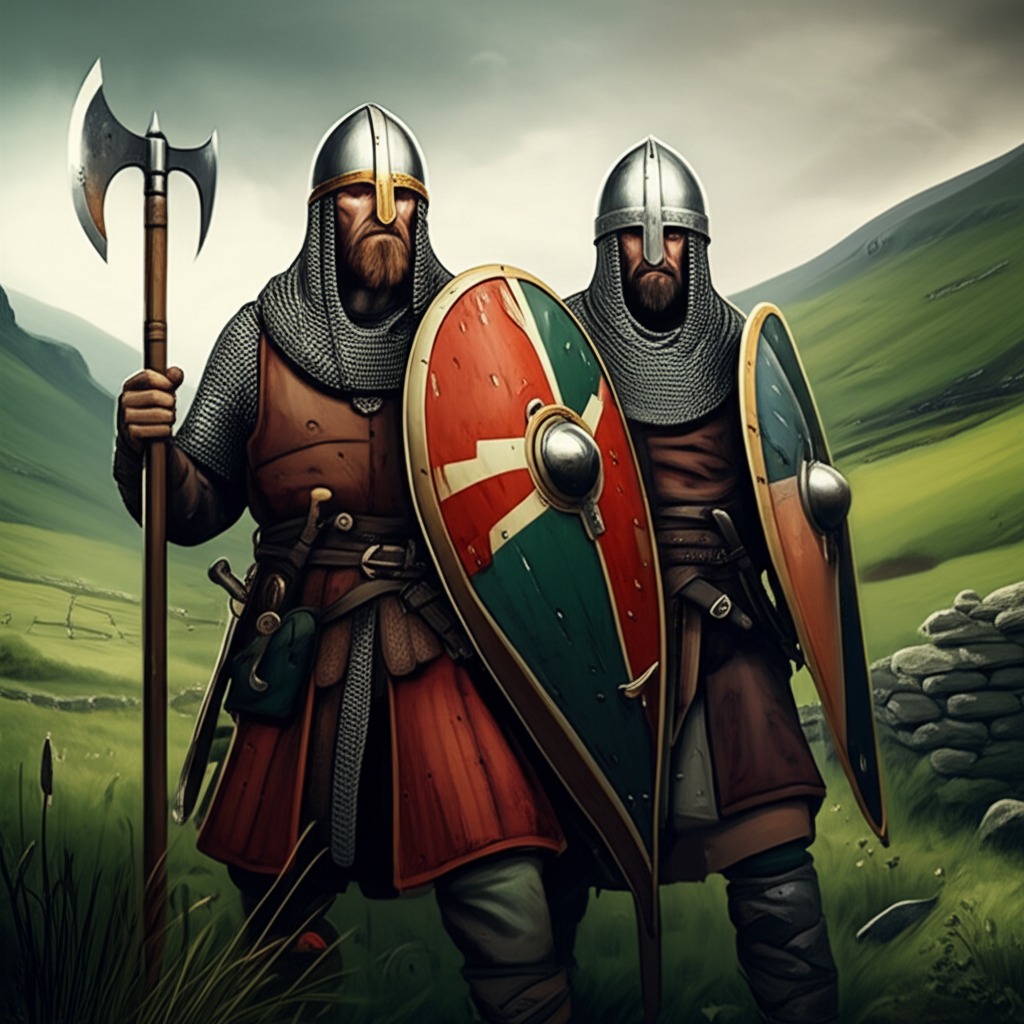
Tactically, the Gallowglass functioned as heavy shock infantry, designed to counter the superior armor and charges of Norman knights. Unlike the lightly armed kerns, who relied on mobility and projectile warfare, these warriors served as a static anchor on the battlefield. Clad in mail coats and iron helmets, and wielding the formidable two-handed sparth axe, they provided the defensive rigidity necessary to hold ground against heavy cavalry. This tactical innovation forced opposing commanders to reconsider the efficacy of the mounted charge, often necessitating a dismounted engagement where the Gallowglass excelled.
Beyond the battlefield, the strategic utility of the Gallowglass lay in their professional status. Maintained by a system of quartering known as coign and livery, they offered Irish chieftains a standing army independent of the seasonal agricultural cycle. This effectively freed the lords from total reliance on unruly tribal levies. By monetizing military service, the Gallowglass enabled the prosecution of wars of attrition, serving as the backbone of Irish resistance and essentially preserving the Gaelic order for centuries against encroaching conquest.