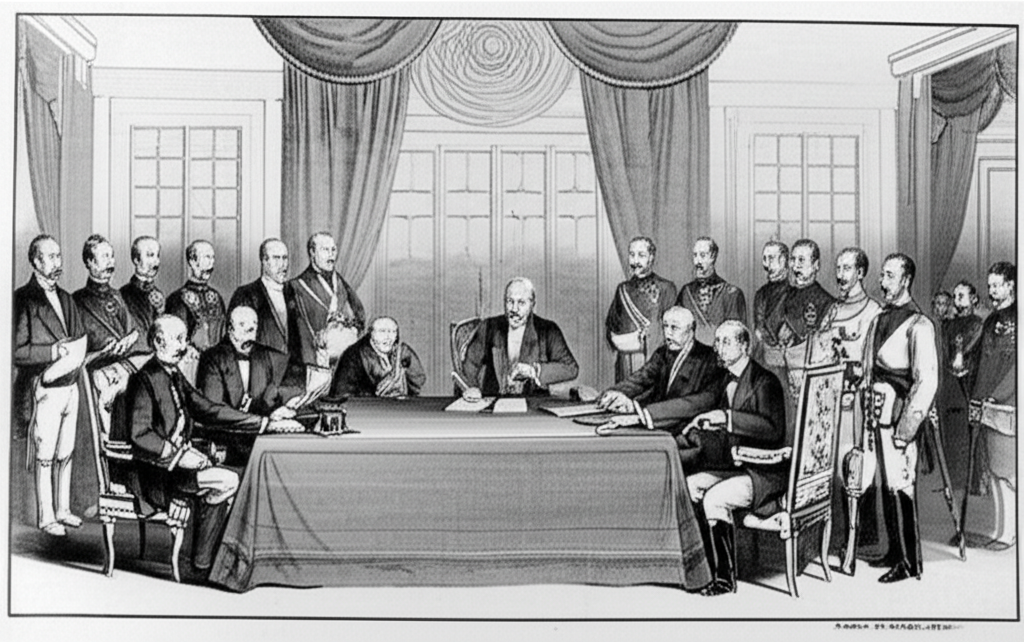
On April 17, 1895, the Treaty of Shimonoseki formalized the conclusion of the First Sino-Japanese War, marking a decisive shift in the geopolitical balance of East Asia. The Qing Dynasty, long regarded as the hegemony of the Orient, capitulated to the rapid modernization efforts of Meiji Japan. This agreement did not merely halt hostilities; it systematically dismantled the traditional tributary system that had defined regional diplomacy for centuries, signaling the rise of a new imperial power.
Strategically, the terms were calculated to cripple Chinese naval capabilities while securing a Japanese foothold on the Asian continent. Japan secured the cession of the Liaodong Peninsula, Taiwan, and the Pescadores Islands, effectively transforming the island nation into a colonial empire. Furthermore, the immense war indemnity levied against Beijing financed Japan’s subsequent adoption of the gold standard and accelerated its heavy industrial militarization. The forced opening of additional treaty ports to Japanese manufacturing allowed Tokyo to compete directly with Western powers within Chinese markets.
Although the subsequent Triple Intervention by Russia, Germany, and France forced the retrocession of Liaodong, the diplomatic victory remained substantial. The treaty exposed the systemic frailty of the Qing Self-Strengthening Movement and confirmed the efficacy of Japan’s assimilation of Western military doctrine. By compelling China to recognize full Korean independence—thereby stripping the Qing of a critical buffer state—Japan successfully laid the geopolitical groundwork for its dominance over the Pacific rim in the early twentieth century.