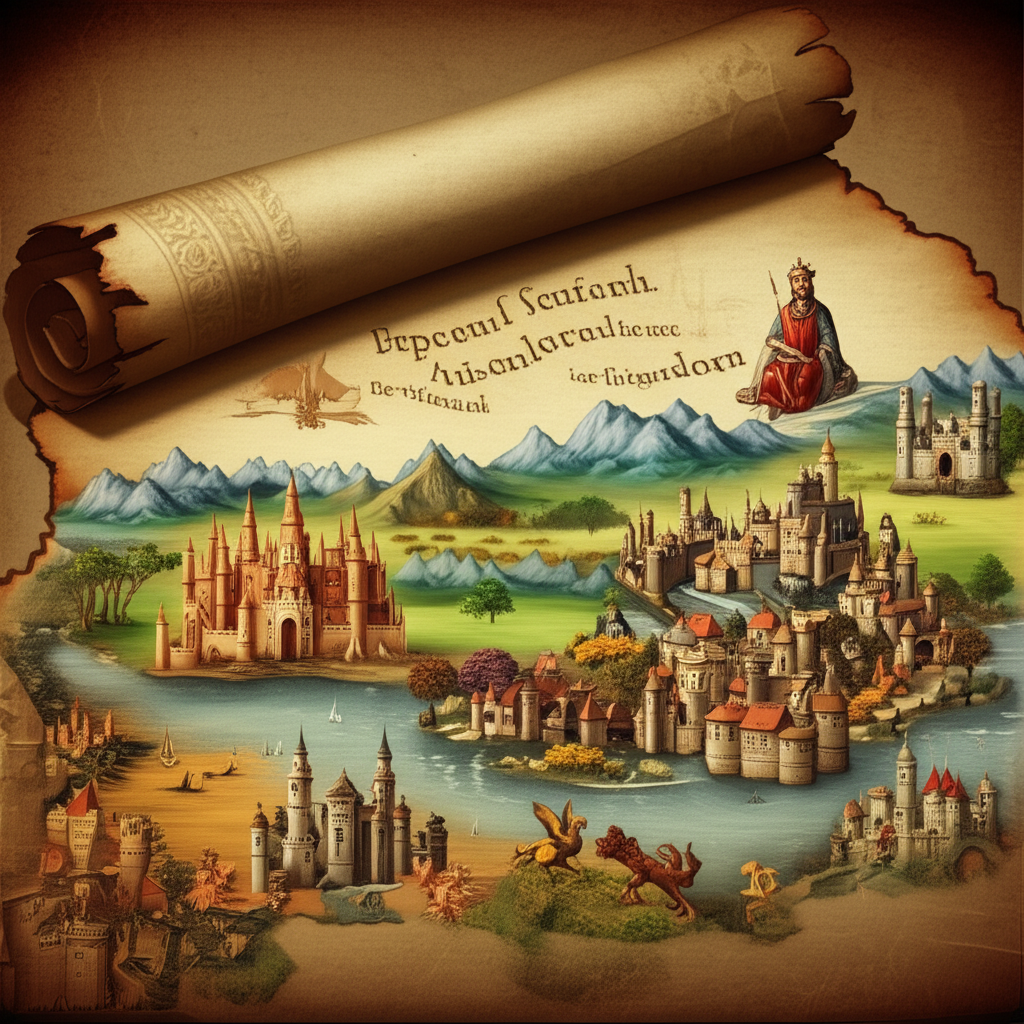
The legend of Prester John emerged not merely as a tale of wonder, but as a potent geopolitical instrument within medieval Europe. Circulating first during the mid-12th century, rumors of a wealthy, Nestorian Christian priest-king ruling in the distant East offered a strategic glimmer of hope to a Christendom beleaguered by religious conflicts in the Levant. The dissemination of a celebrated, albeit forged, letter in 1165 solidified the monarch’s reputation, describing a realm of immense riches and military might capable of flanking the Islamic powers that dominated the Holy Land.
European potentates and pontiffs engaged in centuries of diplomatic maneuvering based on this phantom alliance. The myth fundamentally altered the trajectory of exploration, serving as a primary catalyst for the Age of Discovery. Explorers and missionaries were dispatched across the Silk Road, initially misidentifying the rising Mongol Empire as the vanguard of John’s forces. When the steppes failed to yield the Christian sovereign, the geographical focus of the search shifted southward.
By the 15th century, Portuguese strategists reoriented their quest toward Africa, conflating the mythical kingdom with the Christian empire of Ethiopia. This pursuit drove the circumnavigation of Africa, as mariners sought to link the Western world with this elusive eastern ally. While the tangible kingdom never existed in the form described by legend, the pursuit of Prester John successfully expanded the known world, proving that a fiction, when treated as strategic fact, could reshape the map of history.