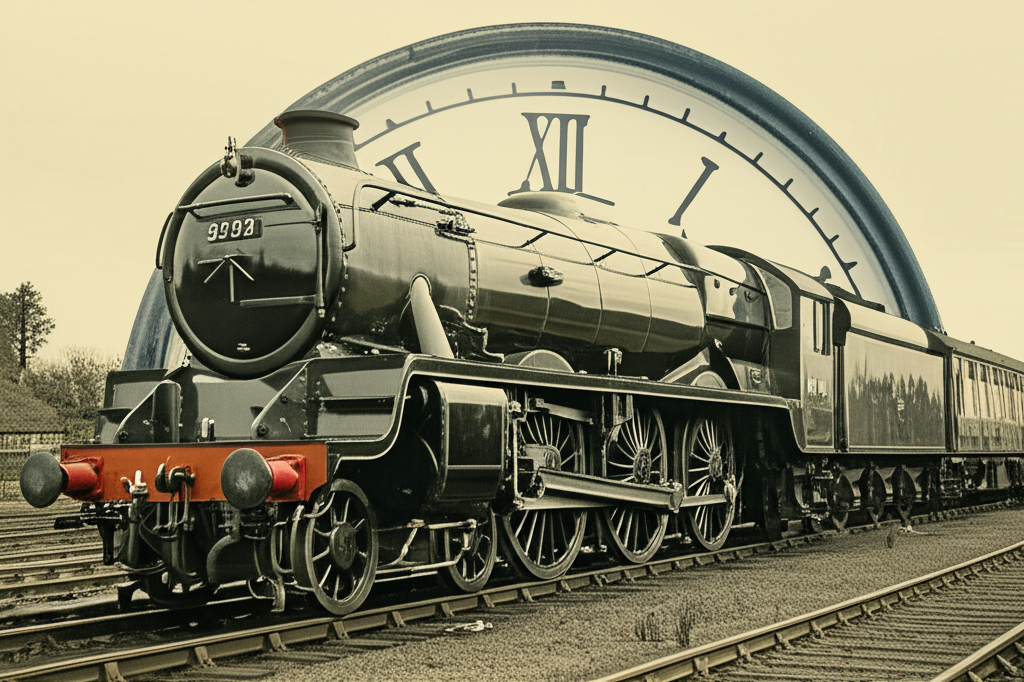
In the early 19th century, the rapid expansion of the rail network exposed the inherent inefficiencies of relying on local solar time. As the Great Western Railway (GWR) extended its iron tracks westward from London, the temporal variance between the metropolis and provincial towns became a severe operational hazard. A difference of merely ten minutes between London and Bristol, while negligible for the era of the stagecoach, posed catastrophic risks for high-speed locomotives operating within tight signal blocks.
Recognizing that precise synchronization was paramount for safety and logistical optimization, GWR directors moved to unify their network’s schedule in November 1840. They mandated that all stations, timetables, and personnel adhere strictly to London Time, a standard later synonymous with Greenwich Mean Time. This strategic decision effectively decoupled civil timekeeping from the position of the sun, prioritizing the relentless efficiency of the mechanical schedule over centuries of local tradition.
To enforce this radical standardization, the railway utilized the newly invented electric telegraph to transmit instantaneous time signals to station masters, ensuring clocks along the line remained perfectly synchronized. Furthermore, guards and conductors were issued chronometers set to the capital’s standard, serving as mobile agents of this temporal unification.
The GWR’s adoption of Railway Time precipitated a sweeping national shift. Other major lines soon followed this precedent to facilitate interconnectivity, establishing a de facto standard decades before Parliament legally enforced it. By harmonizing clocks to optimize the movement of goods and passengers, the GWR did not merely modernize transport; it fundamentally restructured the temporal framework of British society, ending the age of local autonomy in favor of a synchronized industrial future.