
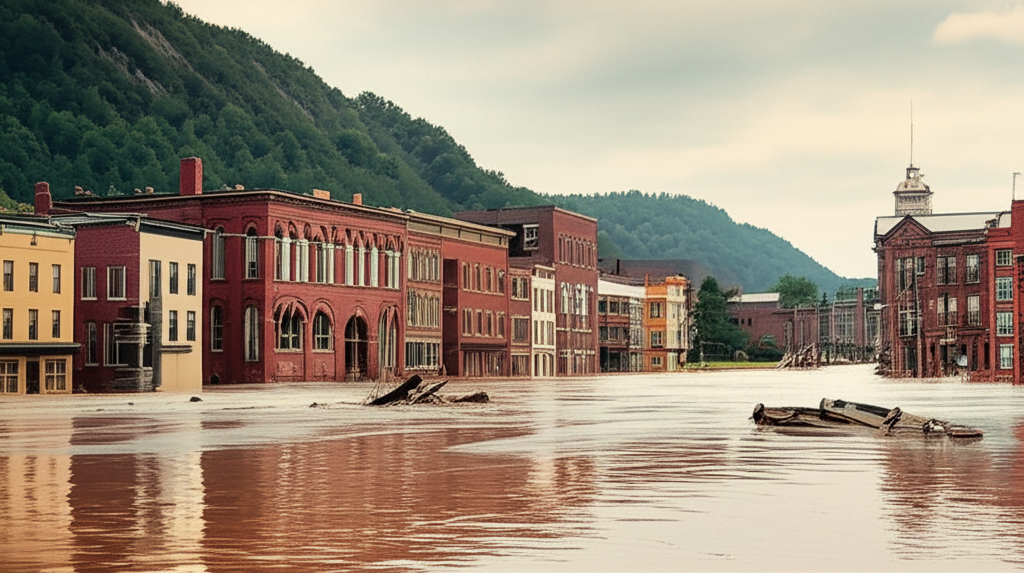
The catastrophic failure of the South Fork Dam on May 31, 1889, served as a harrowing case study in engineering negligence and the stark consequences of unchecked modification to critical infrastructure. Situated high above the working-class borough of Johnstown, Pennsylvania, the earthen structure had been compromised by the leisure-focused alterations of the South Fork Fishing and Hunting Club. Rather than adhering to established hydraulic safety standards, the proprietors removed essential drainage pipes and lowered the dam’s crest to accommodate a carriage road, fatally reducing the containment capacity required to manage torrential spring rains.
When the dam capitulated, the resulting deluge unleashed twenty million tons of water into the Conemaugh Valley. The physical devastation was compounded by the accumulation of debris against the Stone Bridge, a sturdy railway viaduct that withstood the impact. This inadvertent bottleneck created a secondary, flaming barricade that trapped countless victims. This specific structural interaction transformed a hydraulic disaster into a thermal holocaust, illustrating the lethal consequences of urban infrastructure failing to account for catastrophic flow dynamics.
The aftermath of the tragedy catalyzed a significant shift in the strategic mobilization of disaster relief. Clara Barton arrived to coordinate logistics for the American Red Cross, marking the first major peacetime deployment of the organization. While the relief efforts displayed unprecedented organizational optimization, the legal resolution proved less equitable. Despite the evident culpability of the club members regarding the dam’s maintenance, prevailing laws precluded successful litigation against the industrialists. This judicial failure eventually prompted legal scholars to reevaluate strict liability statutes, fundamentally influencing future legislation regarding corporate accountability for man-made disasters.


