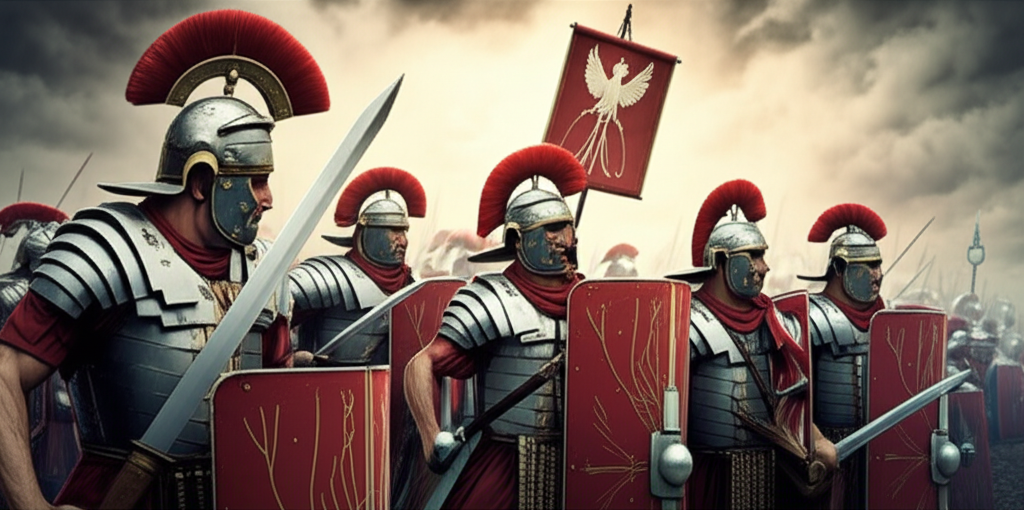
Following the demise of the Julio-Claudian dynasty in 68 AD, the Roman state fractured under the weight of a revealed political truth: a Princeps could be established elsewhere than in Rome. The ensuing conflict, known as the Year of the Four Emperors, was not merely a chaotic struggle for the throne, but a fundamental realignment of military power from the capital to the provincial frontiers.
The initial claimant, Galba, failed to secure his position through a fatal misunderstanding of political patronage. By refusing to pay the customary donative to the Praetorian Guard, he alienated his immediate protectors, allowing Otho to usurp control within the city. However, Otho’s authority remained fragile, as he lacked the support of the heavy infantry stationed on the Rhine. These legions had already acclaimed Vitellius, whose subsequent march on Italy demonstrated the overwhelming superiority of the frontier armies over the urban cohorts.
The civil war concluded only when Vespasian, commanding the forces in Judea, executed a superior grand strategy. Rather than rushing immediately to Rome, he secured the allegiance of the Eastern governors and captured Egypt, thereby controlling the imperial grain supply. While his allies led the Danubian legions to victory at the Second Battle of Bedriacum, Vespasian’s economic stranglehold ensured that the Flavian dynasty would inherit a pacified, albeit exhausted, state. The conflict permanently shifted the center of gravity away from the Senate and toward the commanders who held the loyalty of the distant legions.