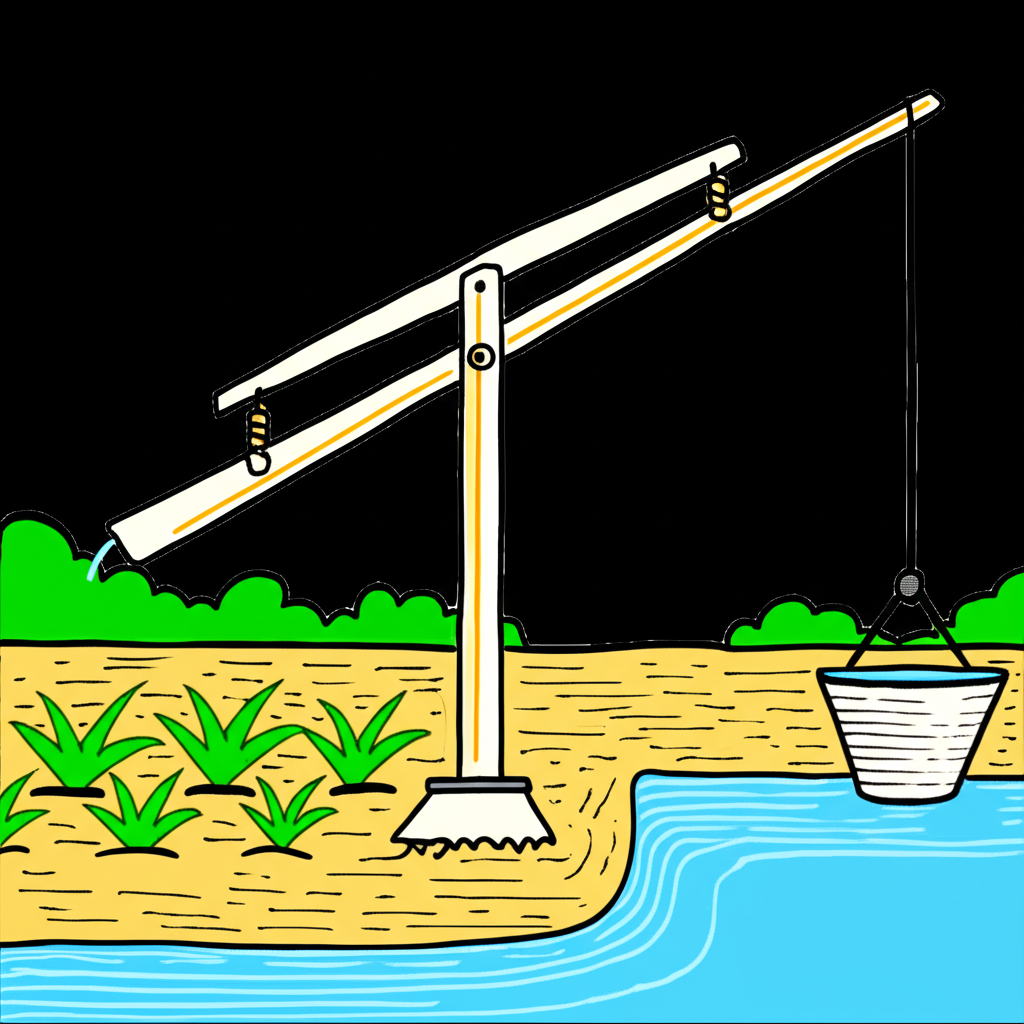
The emergence of the shadoof marked a pivotal moment in the hydraulic history of ancient civilizations. No longer bound solely by the capricious nature of seasonal flooding, early agriculturalists employed this counter-balanced lifting device to extend cultivation boundaries. The mechanism represented a practical application of the Class 1 lever, utilizing a suspended fulcrum to minimize the physical exertion required to elevate water from the Nile or Euphrates to adjacent field channels.
The efficacy of the device lay in its calibrated balance. By attaching a calculated counterweight—often a heavy limestone block or packed mud—to the short arm of the beam, the engineers of antiquity effectively neutralized the load of the full water vessel on the long arm. This equilibrium meant the operator applied force primarily to guide the bucket downward, rather than lifting the heavy volume upward against gravity. This optimization of torque allowed a single laborer to displace significant volumes of water with rhythmic efficiency, transforming a strenuous task into a repetitive, sustainable motion.
Strategic deployment of these tools involved more than isolated use. Historical records suggest the implementation of shadoof relays, where multiple devices operated in a tiered series. This stepped approach conquered steep riverbanks, elevating water progressively from the low water table to the highest arable terraces. Consequently, the adoption of this engineering solution facilitated perennial farming, liberating societies from total dependence on the inundation cycle and securing the food supply for expanding empires.