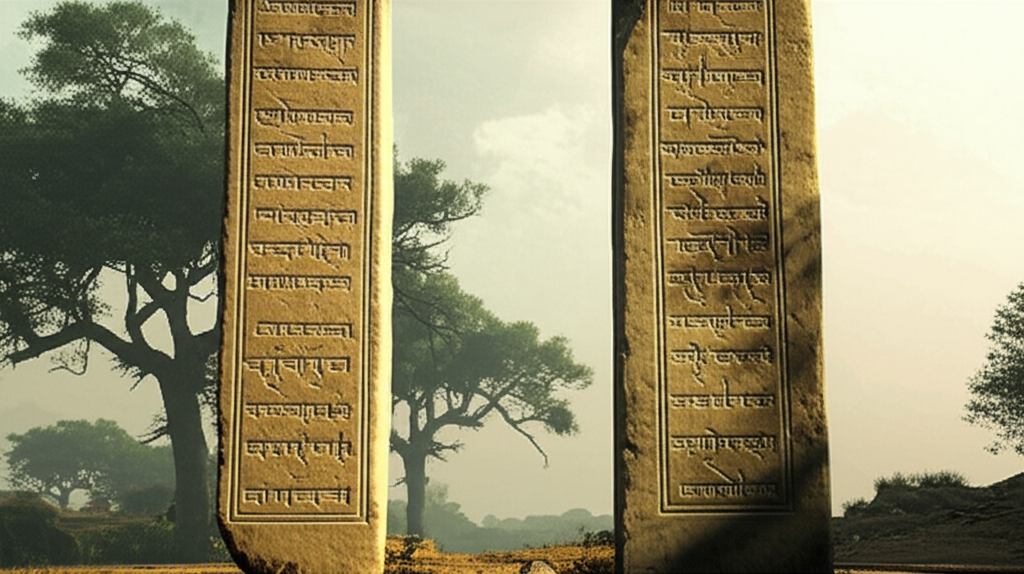
The conquest of the coastal region of Kalinga by the Mauryan Empire in roughly 261 BCE marked a definitive paradigm shift in ancient Indian statecraft. While traditional narratives often focus on the personal remorse of Emperor Ashoka, a strategic analysis of Rock Edict XIII reveals a calculated transition from military expansionism to political consolidation. The sheer scale of destruction necessitated a new model of governance to maintain order in a rebellious province. Consequently, the emperor abandoned Digvijaya (victory through conquest) in favor of Dharmavijaya (victory through righteousness), effectively utilizing moral authority as a tool for imperial cohesion.
This strategic pivot was most visible in the Separate Kalinga Edicts found at Dhauli and Jaugada. Here, Ashoka addressed his officials directly, establishing a judicial code designed to prevent maladministration and subsequent unrest. By proclaiming that “All men are my children,” the monarch sought to integrate the vanquished population into the imperial fold through psychological pacification rather than continuous military occupation. He appointed Mahamatras (high-ranking officers) to ensure judicial fairness, thereby mitigating the risk of insurrection in the newly annexed territory.
Furthermore, the edicts served as permanent, immutable laws carved in stone, projecting the power of the central administration to the fringes of the empire. The promotion of Dhamma was not merely a religious endeavor but a sociopolitical strategy to unify a diverse and multi-ethnic empire under a common ethical framework. Thus, the Kalinga Edicts represented the maturation of the Mauryan state from an aggressive war machine into a sophisticated, welfare-oriented autocracy that prioritized internal stability over territorial acquisition.