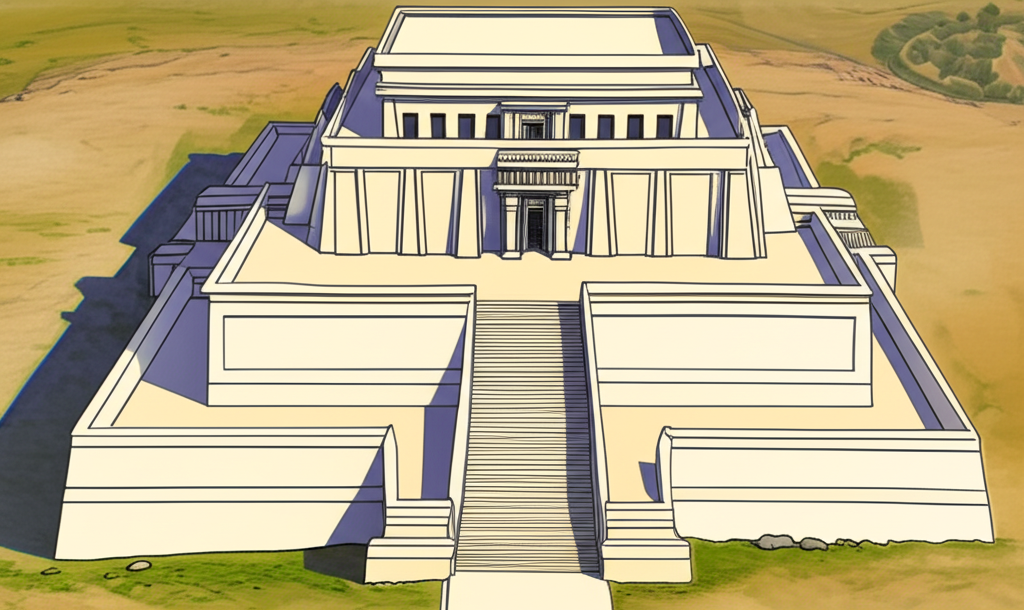
Situated within the sacred precinct of Uruk, the White Temple stood as a testament to the Sumerian mastery of verticality and spatial organization. Erected atop the massive Anu Ziggurat, the structure was not merely a place of worship but a strategic architectural assertion of theocratic power. The builders utilized sun-dried mud bricks, a material necessitated by the scarcity of stone in the region, yet they transcended the medium’s humble nature through precise engineering and aesthetic modification.
The internal configuration adhered to a rigorous tripartite plan, a hallmark of monumental architecture during the Uruk period. This layout featured a central hall, or cella, flanked by subsidiary chambers on both sides. This division optimized the flow of ritual activity, strictly demarcating the sacred center while restricting access to the ecclesiastical elite. Unlike the axial alignment common in later eras, the temple employed a bent-axis approach. This stairway arrangement compelled visitors to circumambulate the massive platform, enforcing a calculated visual engagement with the edifice before granting entry to the sanctuary.
Externally, the architects addressed the structural limitations of mud brick through the strategic application of buttresses and recesses. This technique strengthened the walls while creating a rhythmic interplay of light and shadow under the Mesopotamian sun. The structure earned its modern designation from the thin layer of gypsum plaster that coated its exterior. This brilliant white facade rendered the temple visible from great distances, serving as an undeniable focal point that physically and symbolically bridged the gap between the administration of the city and the celestial realm of the sky god Anu.