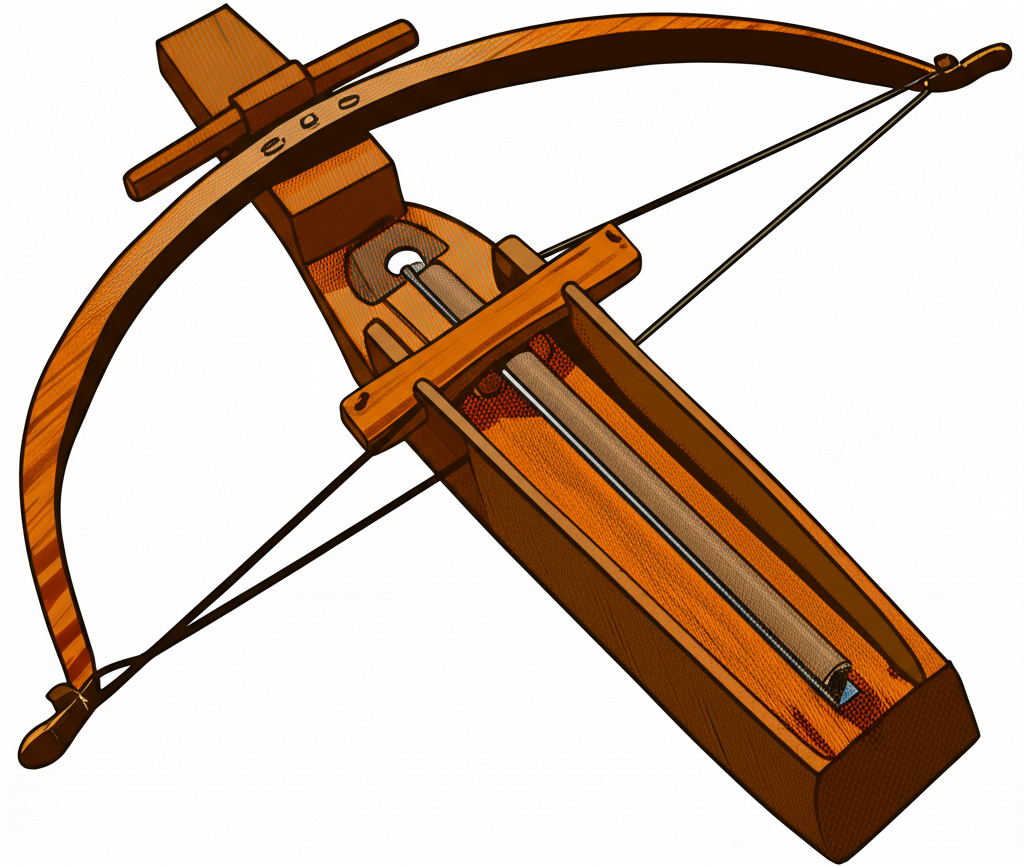
The emergence of the Gastraphetes, or “belly-bow,” marked a pivotal shift in the mechanics of Hellenistic siege warfare. Attributed to the engineering drive under Dionysius I of Syracuse, this device represented the first successful attempt to mechanically augment the energy storage of the traditional bow. By mounting a powerful composite prod onto a wooden stock, engineers transcended the physical limitations of the human archer, utilizing the operator’s body weight rather than arm strength to span the weapon.
Strategically, the deployment of this apparatus altered the effective engagement distance during fortified assaults. The weapon utilized a sliding mechanism and a curved rest, allowing the soldier to press their stomach against the stock to lock the string. This mechanical advantage enabled the propulsion of heavy bolts with sufficient kinetic energy to pierce the armor of the era at ranges previously unattainable.
It allowed attackers to clear enemy battlements from a position of relative safety.
It neutralized the height advantage typically held by defenders on walls.
Prior to the invention of torsion artillery, the belly-bow served as the primary instrument for suppression. It forced defenders to seek cover, thereby creating the necessary windows of opportunity for siege towers and rams to breach the fortifications. While eventually superseded by the larger oxybeles and ballistae, the belly-bow established the fundamental principles of mechanical artillery that dominated Mediterranean warfare for centuries.