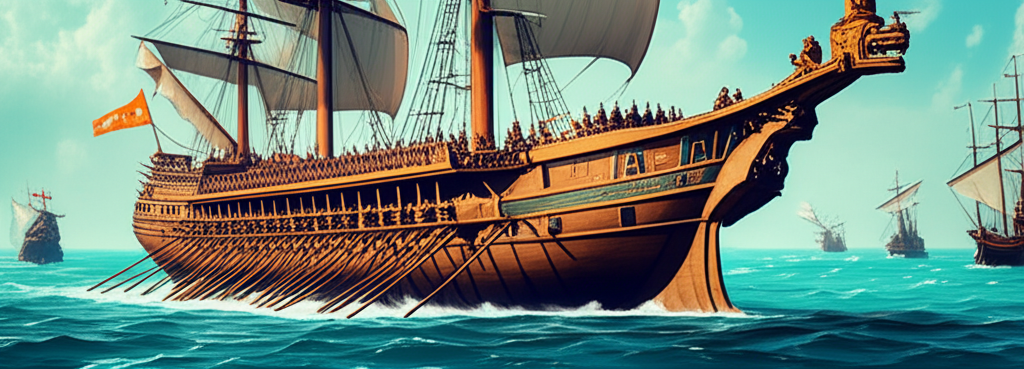
Under the imperial stewardship of Rajaraja I and his successor Rajendra I, the Chola Dynasty transcended traditional terrestrial boundaries to establish a maritime hegemony unprecedented in South Indian history. Unlike their contemporaries, who utilized naval power primarily for coastal defense or limited troop transport, the Chola administration engineered a sophisticated blue-water navy capable of sustained long-distance campaigns. This strategic shift represented a calculated evolution in military doctrine, specifically designed to project power across the Bay of Bengal and dominate the eastern trade networks.
The naval strategy prioritized the control of economic choke points rather than mere territorial annexation. The celebrated expedition against the Srivijaya empire in 1025 CE serves as the definitive example of this geopolitical optimization. By neutralizing Srivijayan authority over the critical straits of the Malay Archipelago, the Chola fleet effectively unlocked the maritime silk route for direct commerce with the Song Dynasty of China. This maneuver bypassed costly intermediaries, ensuring that the immense wealth of Indian Ocean trade flowed directly into the imperial treasury at Thanjavur.
Structurally, the navy was organized into specific squadrons that allowed for flexible tactical deployment during oceanic voyages. This organizational efficiency, combined with advanced shipbuilding techniques, enabled the maintenance of logistical supply lines over vast distances. The resulting era of naval supremacy did not merely expand the empire’s borders; it secured a sphere of influence that dictated the terms of commerce and cultural exchange throughout Southeast Asia for more than a century.