
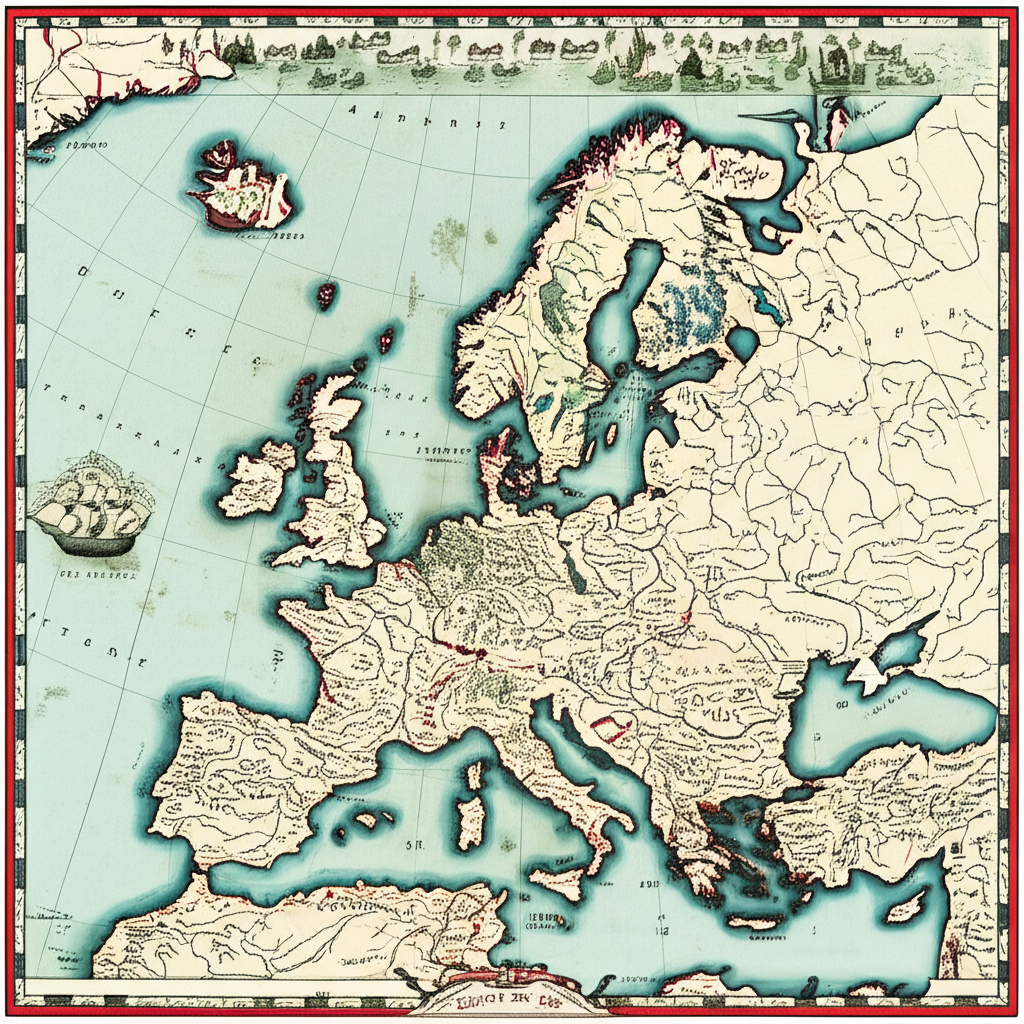
The emergence of the Hansa represented a pivotal shift in medieval economics, transforming loose merchant associations into a dominant political entity. Originating in the 12th century with Lübeck acting as its administrative center, the League prioritized the acquisition of exclusive trading privileges over territorial conquest. This strategy allowed the confederation to establish a rigid mercantile monopoly across the Baltic and North Seas, effectively dictating commercial terms to foreign sovereigns who relied heavily on the tax revenue generated by Hanseatic efficiency.
Central to their strategic dominance was the operation of the Kontor, a network of foreign trading posts established within major commercial hubs such as London, Bruges, and Bergen. These enclaves functioned as autonomous legal jurisdictions, insulating merchants from local law while facilitating the seamless exchange of high-value goods. The League’s optimization of supply chains relied on the strict control of key resources:
Domination of the Scania Market ensured exclusive rights to the herring trade, a staple food source for Catholic Europe.
Management of Lüneburg salt production created a dependency for nations requiring preservation methods.
* The use of blockades and embargoes served as economic weaponry to suppress competition and discipline non-compliant ports.
Despite centuries of hegemony, the League’s decentralized structure ultimately proved to be its strategic undoing. As consolidated nation-states emerged in the early modern period, they implemented protectionist policies and fielded centralized navies that the loose federation of towns could not effectively counter. By the 17th century, the shifting of trade routes toward the Atlantic and the decline of the Baltic monopoly signaled the end of Hanseatic supremacy, though their framework for cross-border commercial law left an enduring legacy on European trade.

